
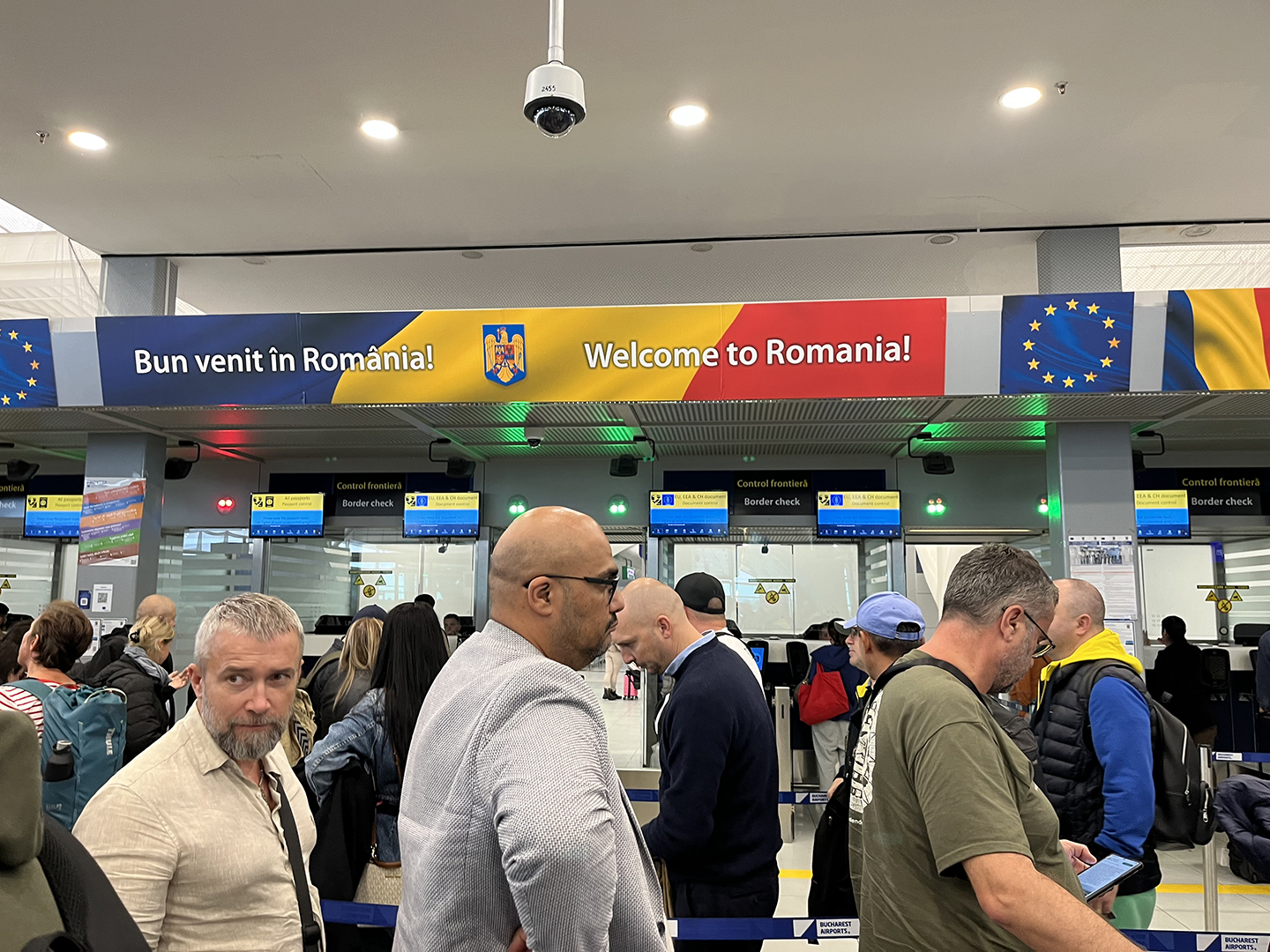
Arriving in Bucharest
Thursday, October 16th: Flew from Toronto Pearson Airport to Heathrow and then on to Bucharest for the start of our two-week Danube River cruise on Ama Waterway’s ship, Amabella.
Booked into the Grand Hotel Continental (56 Calea Victorei) and explored the neighbourhood. Our first impression was the amount of graffiti on public buildings, the fractured paving stones of the sidewalks making walking treacherous and the number of Romanians who smoke. And the number of coffee shops!
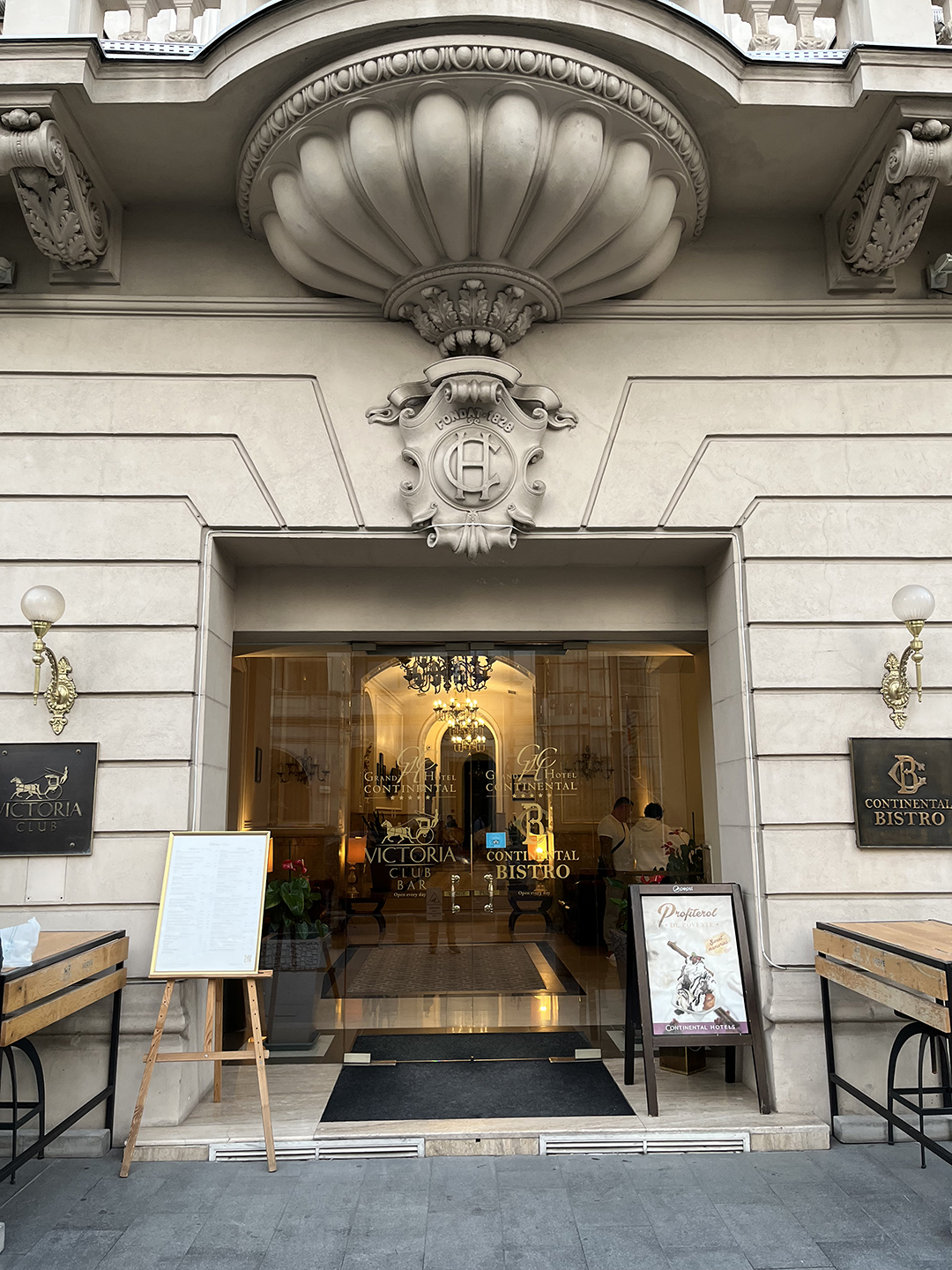
Our hotel
This evening, we dined at a restaurant called Excalibur, themed on the Arthurian legend of the magic sword King Arthur pulled from the rock (recreated at the entrance to the restaurant).
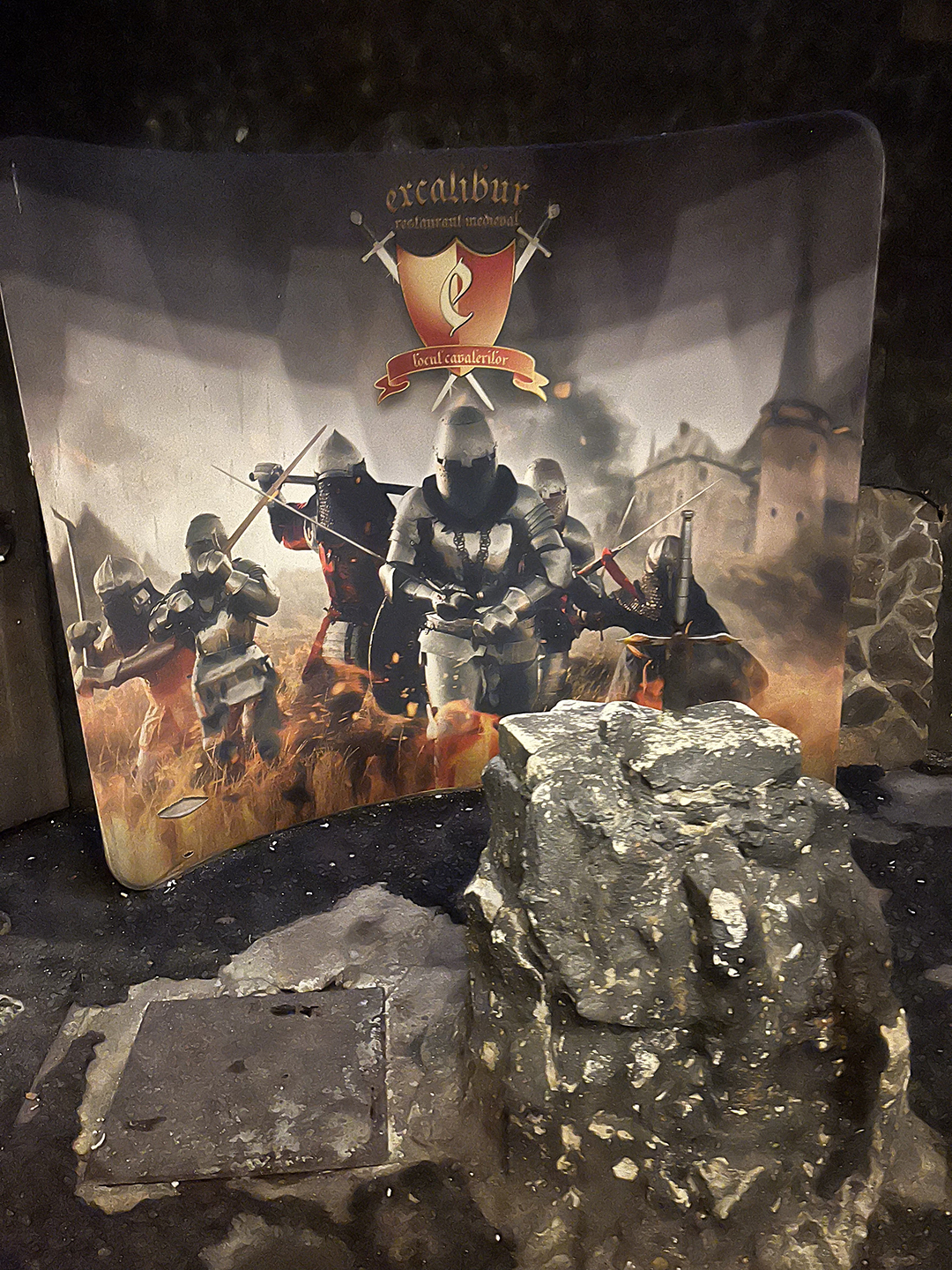
The Excalibur

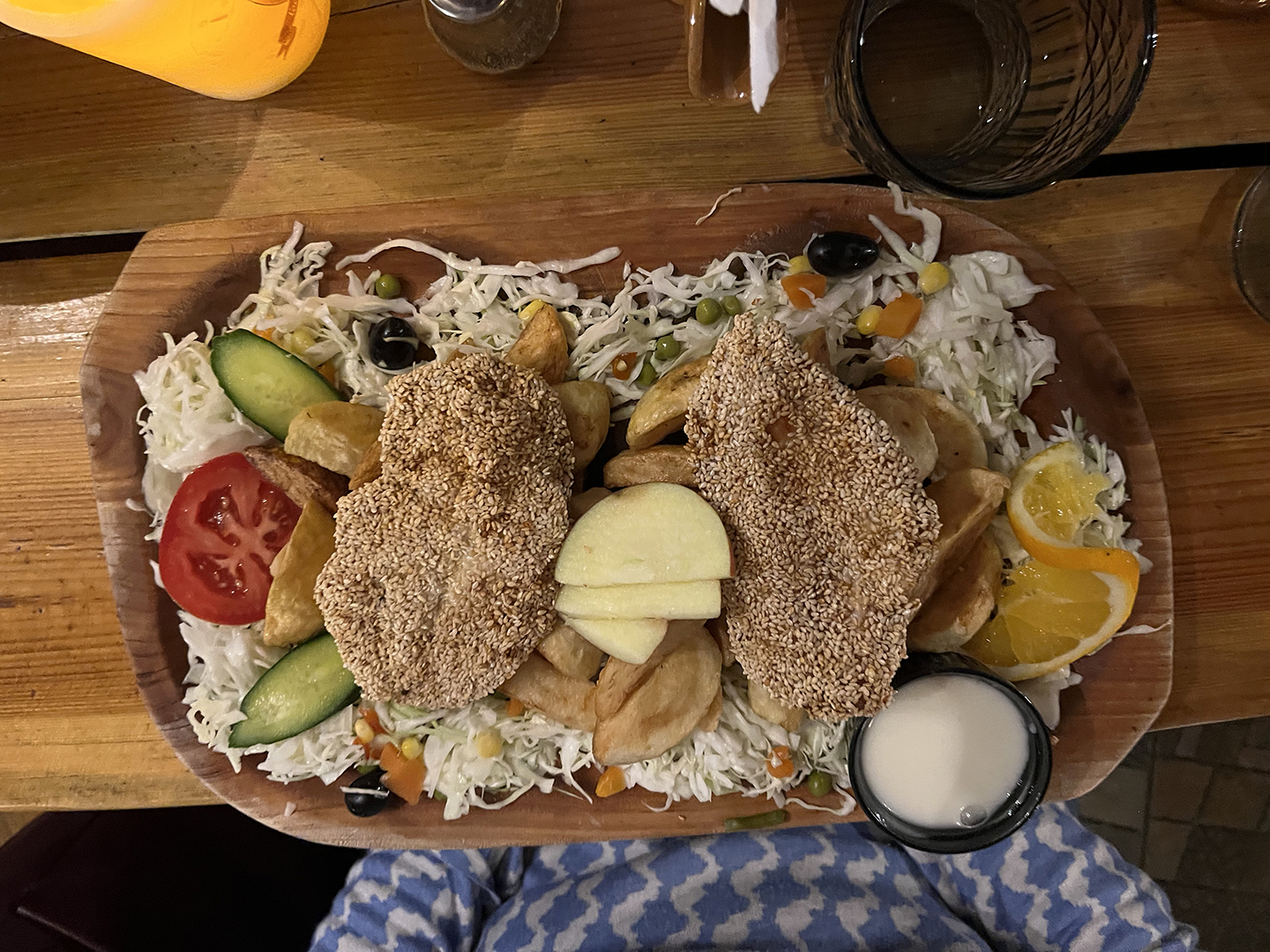
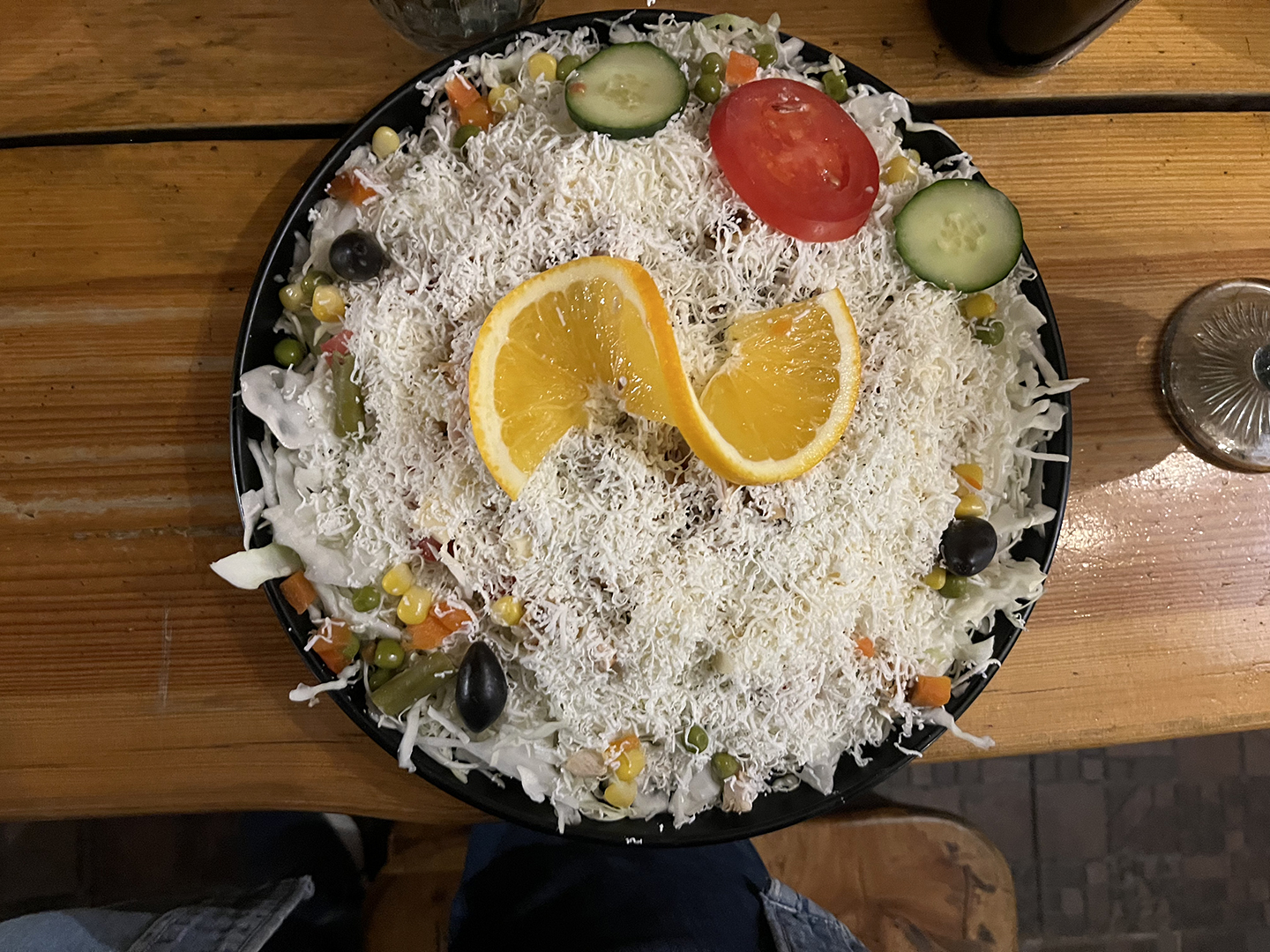
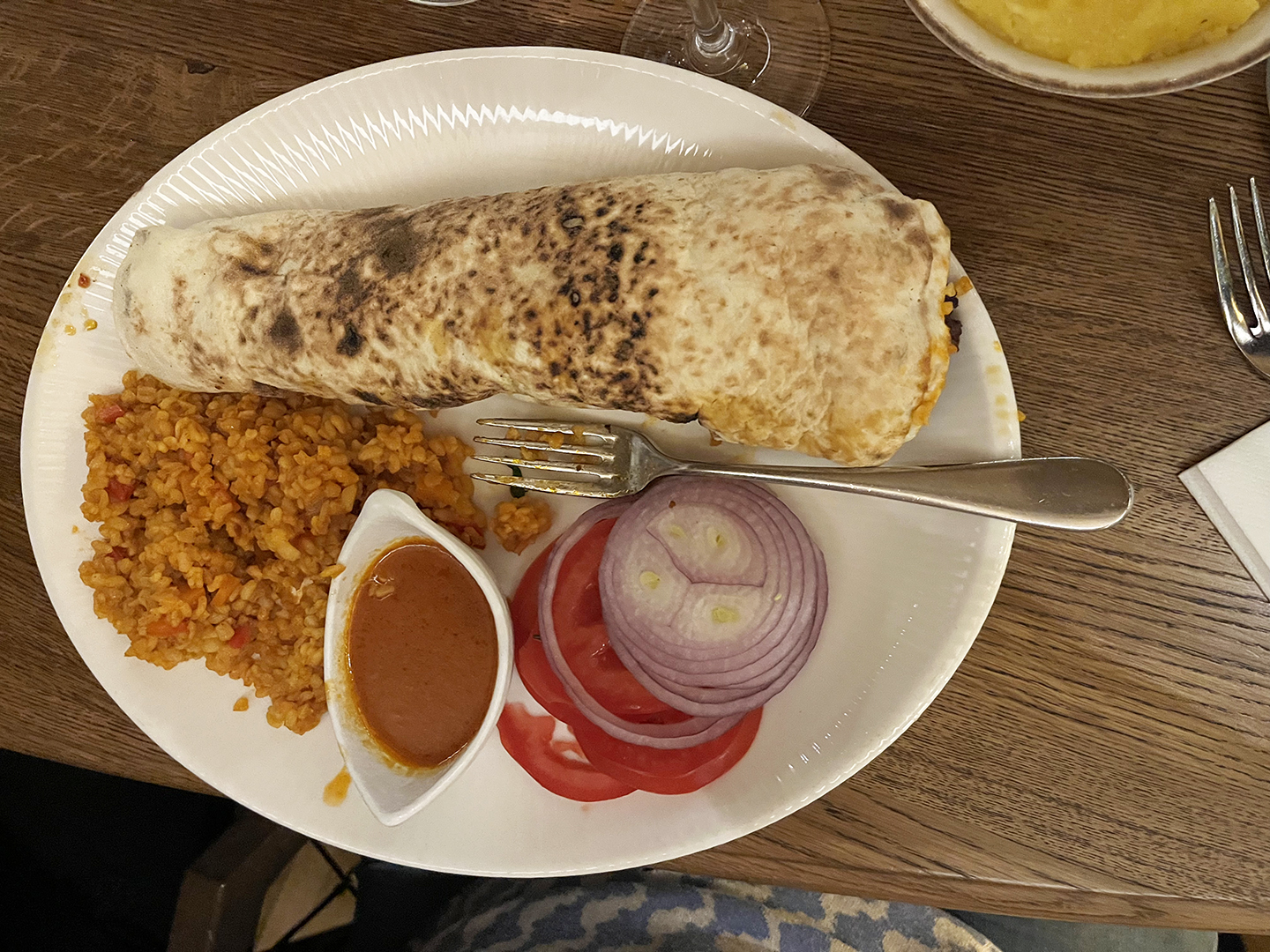
The dining room was decorated for Hallowe’en, which is widely celebrated in Bucharest. We were amazed at the size of the portions and how much the locals ate! A neighbouring table of four guys demolished two flagons of Tuborg pilsner on tap along with these trencherman dishes.

Beer on tap!
Friday, October 17th: Walked around Bucharest, through Piata Revolutiei (Revolution Square – commemorating the 1989 Revolution).
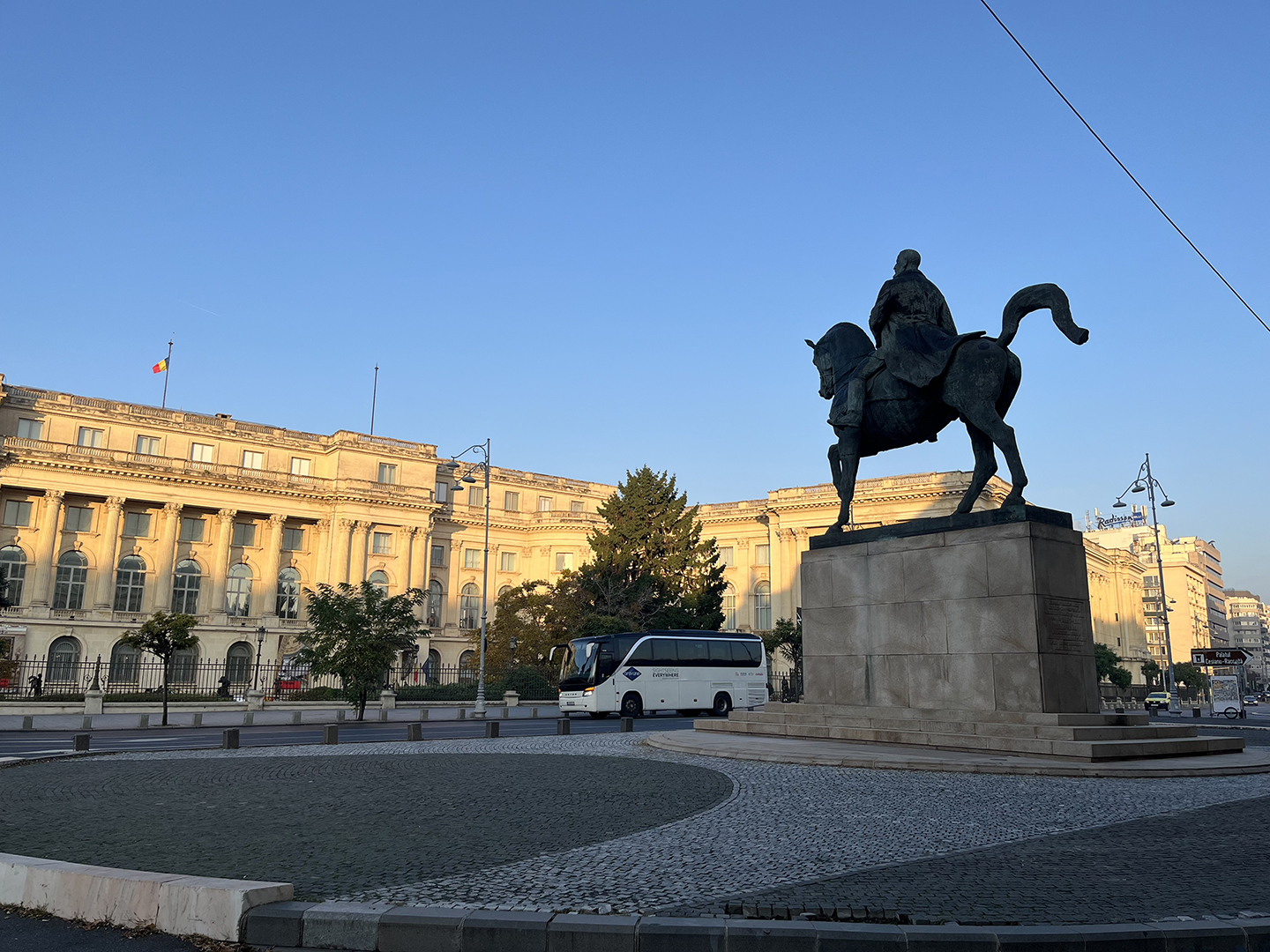
Equestrian statue of King Carol I, Romania’s first king, on the Calea Victoriei
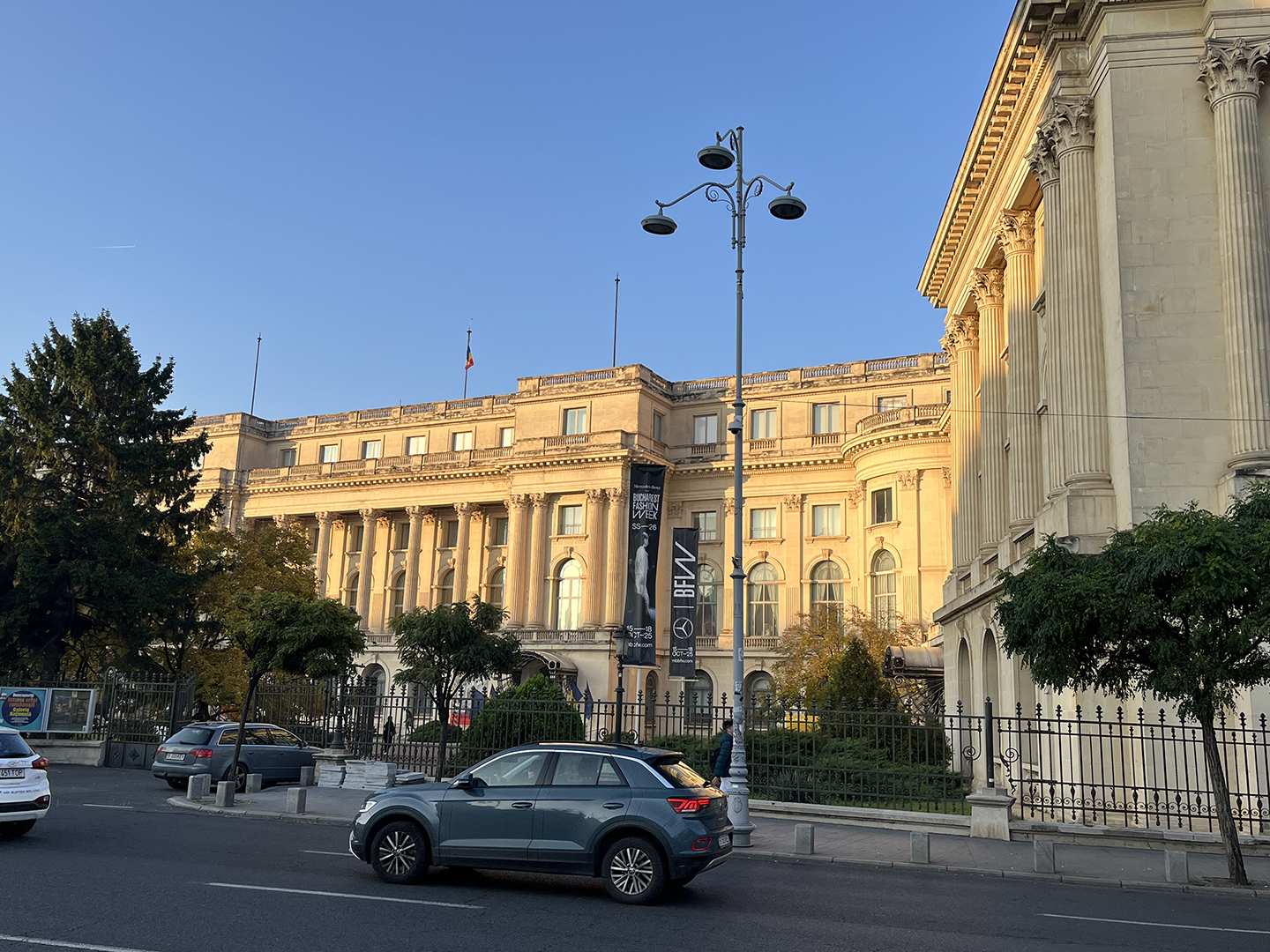
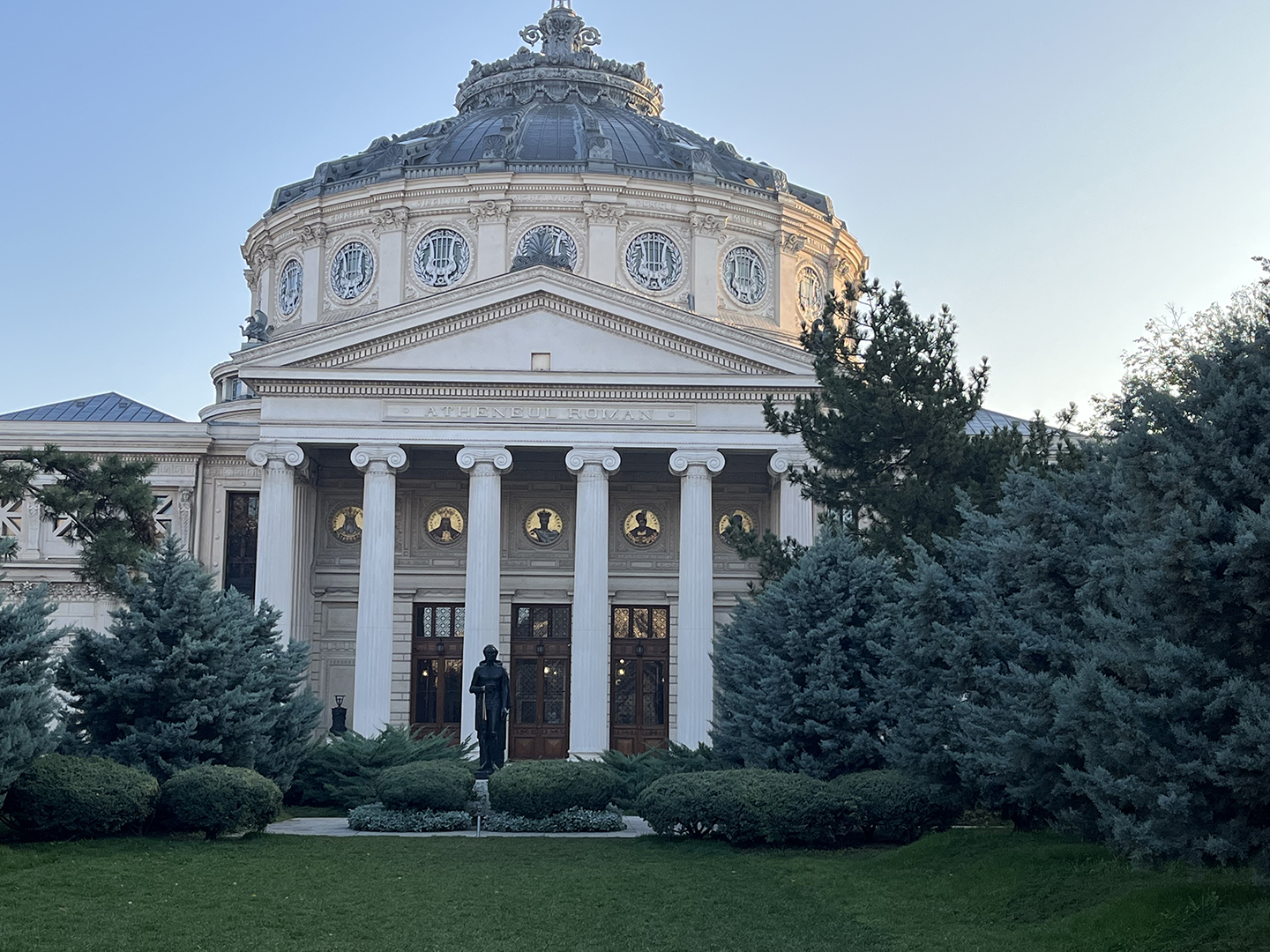
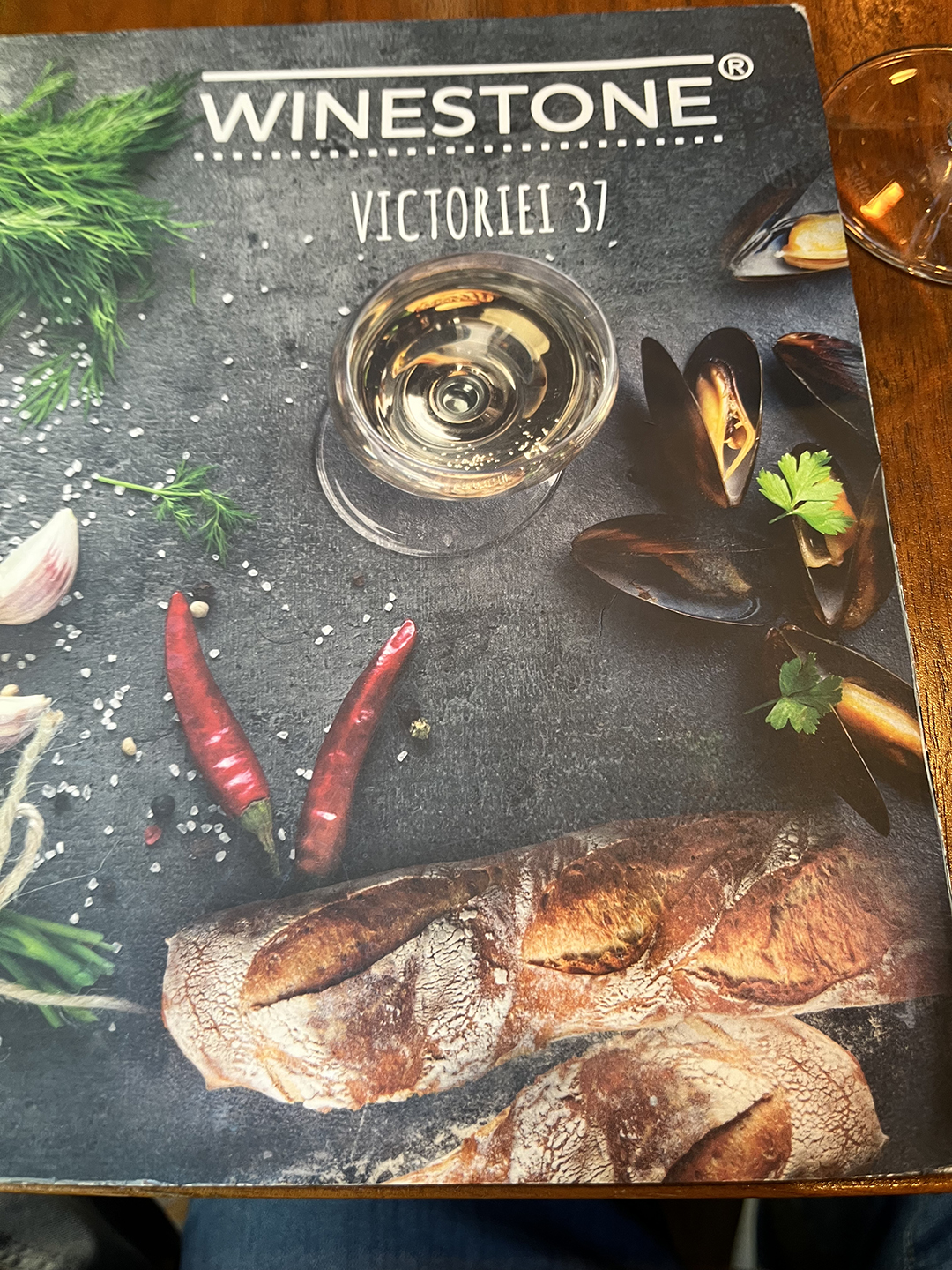
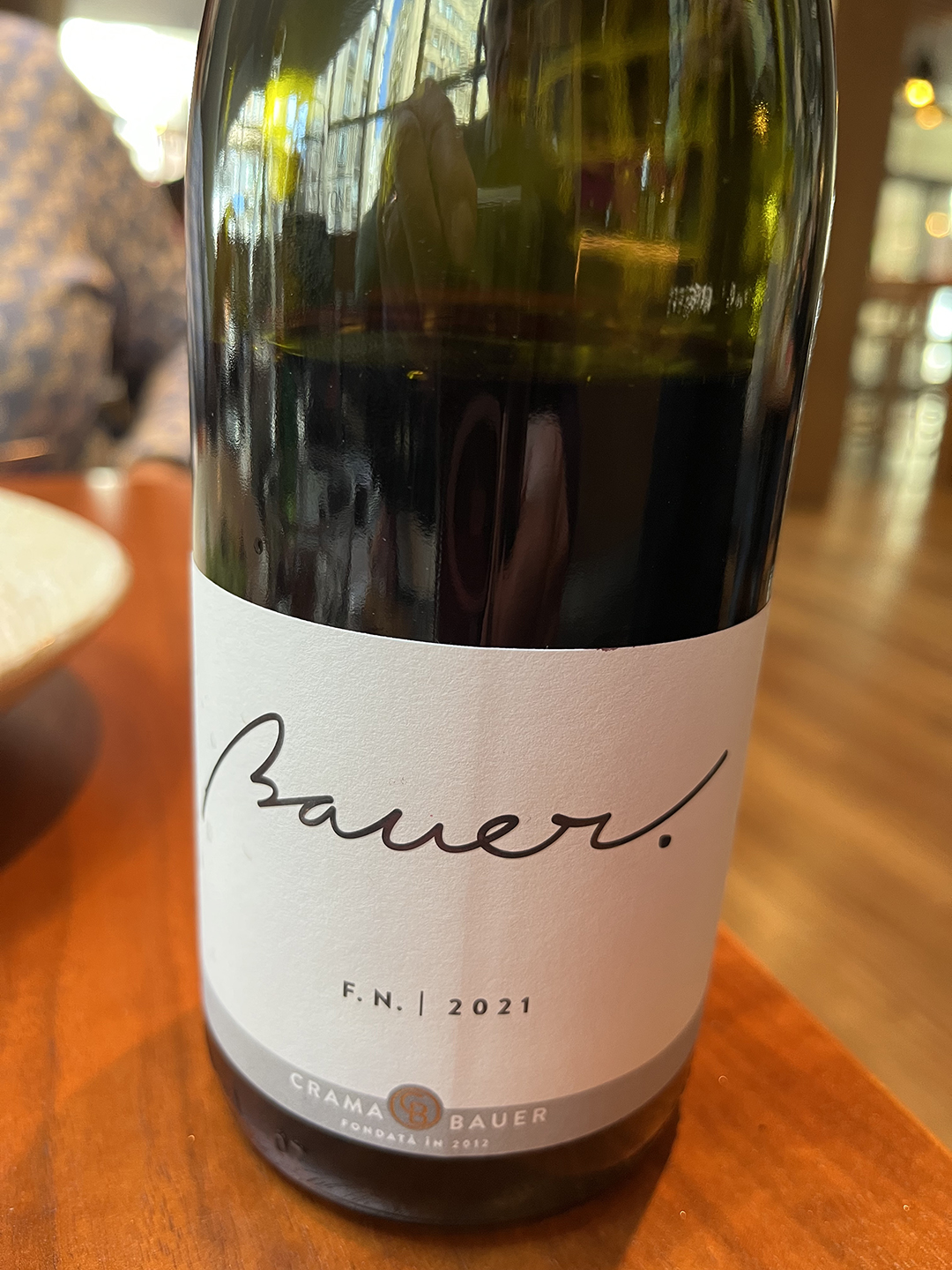
Lunched at Winestone (Victoriei 37). The sommelier there introduced us to the wines of Oliver Bauer, a German winemaker who owns “a small, precision-driven winery located in Dragasani, founded by winemaker Bauer in 2012. The winery specializes in limited-lot wines that explore characterful Romanian grape varieties, including indigenous grapes like Fetească Neagră, and international varieties such as Cabernet Sauvignon and Merlot.”
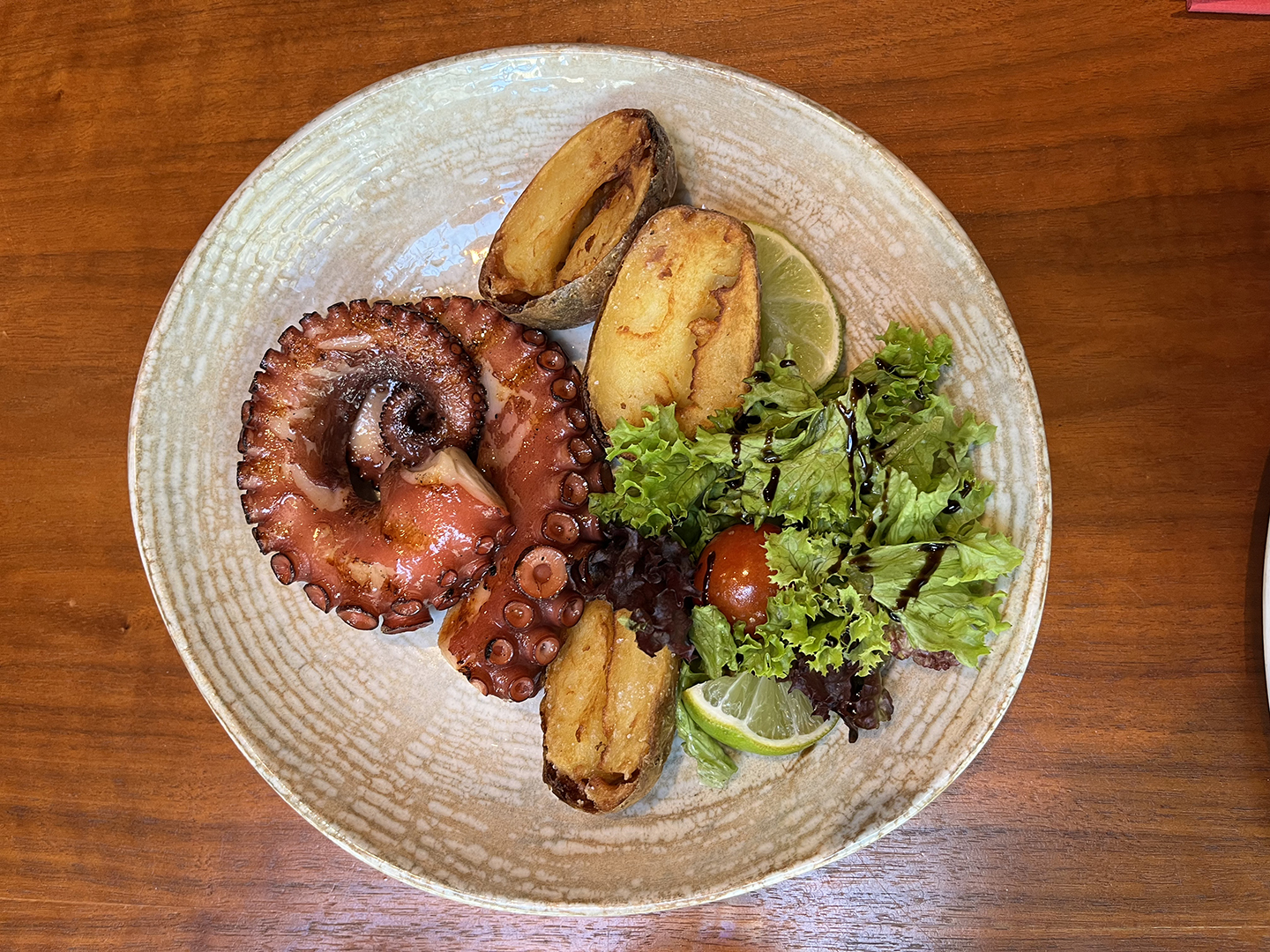
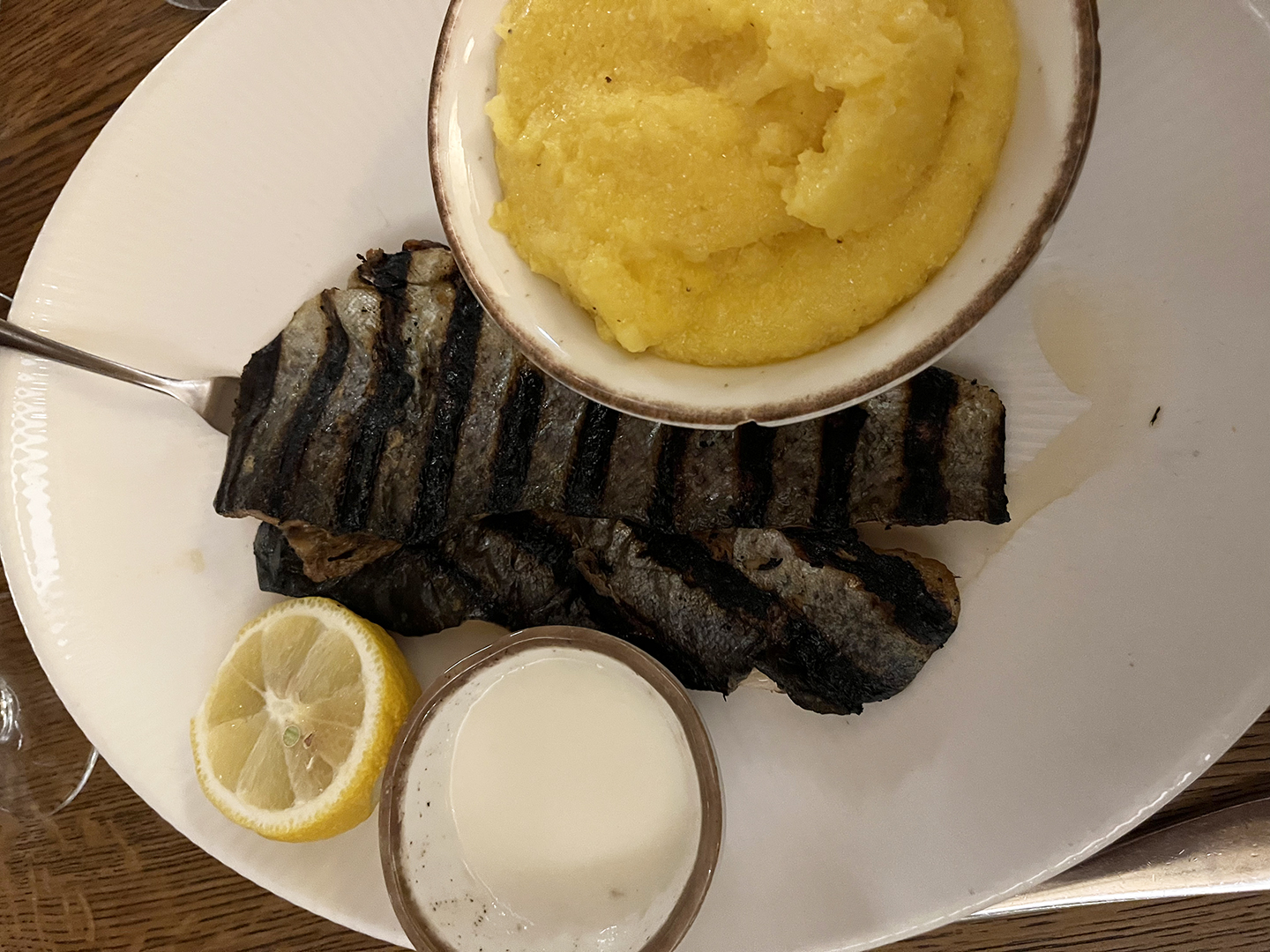
With our plates of grilled squid, we ordered a bottle of Bauer F. N. 2021. F.N. stands for Fetească Neagră. According to Wikipedia, Black Maiden is an old pre-phylloxeric variety of Romanian grape, cultivated mainly in several areas in the Romanian regions of Moldavia, Muntenia, Oltenia, Banat, Northern Dobruja and also in the Republic of Moldova.
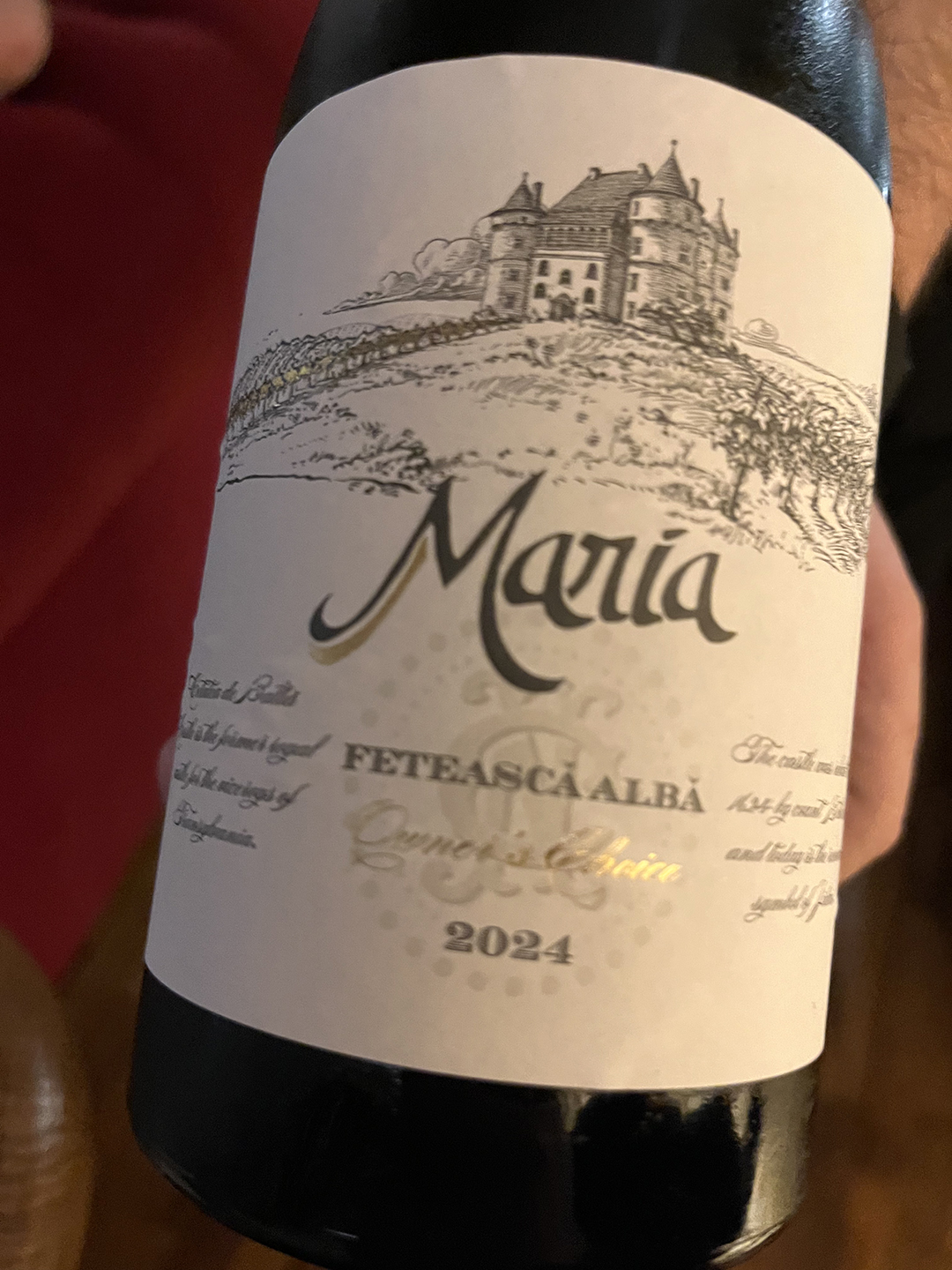
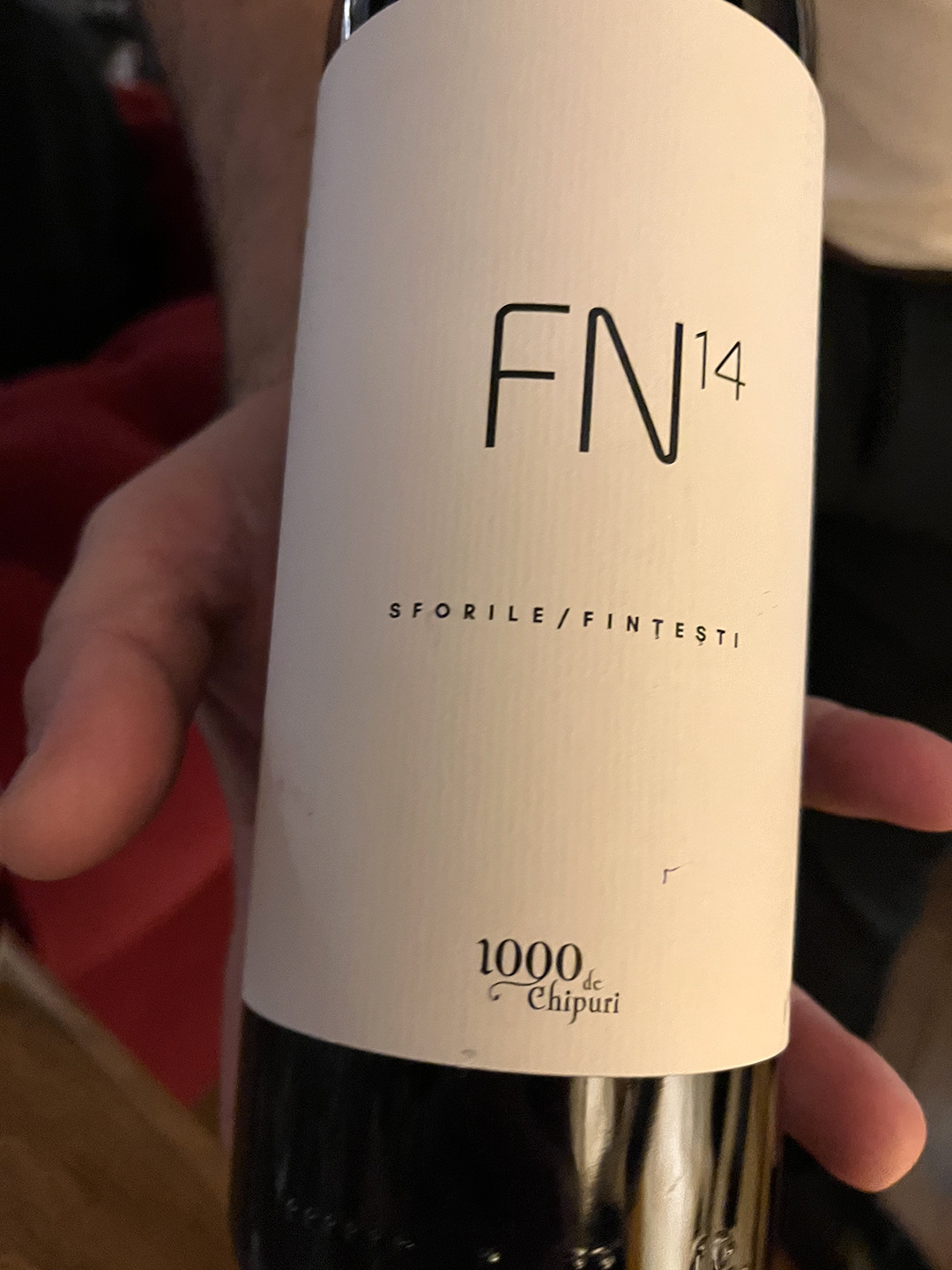
For dinner, we walked into the Old Town to a famous restaurant called Hanu’ Lui Manuc, an ancient inn dating back to 1808, serving traditional Romanian dishes along with live music. Ordered a bottle of Jidvei Maria Fetească Albă 2024, a white wine from the Tarnave DOC region of Transylvania, and 1000 de Chipuri Sforile/Fințești FN 14.
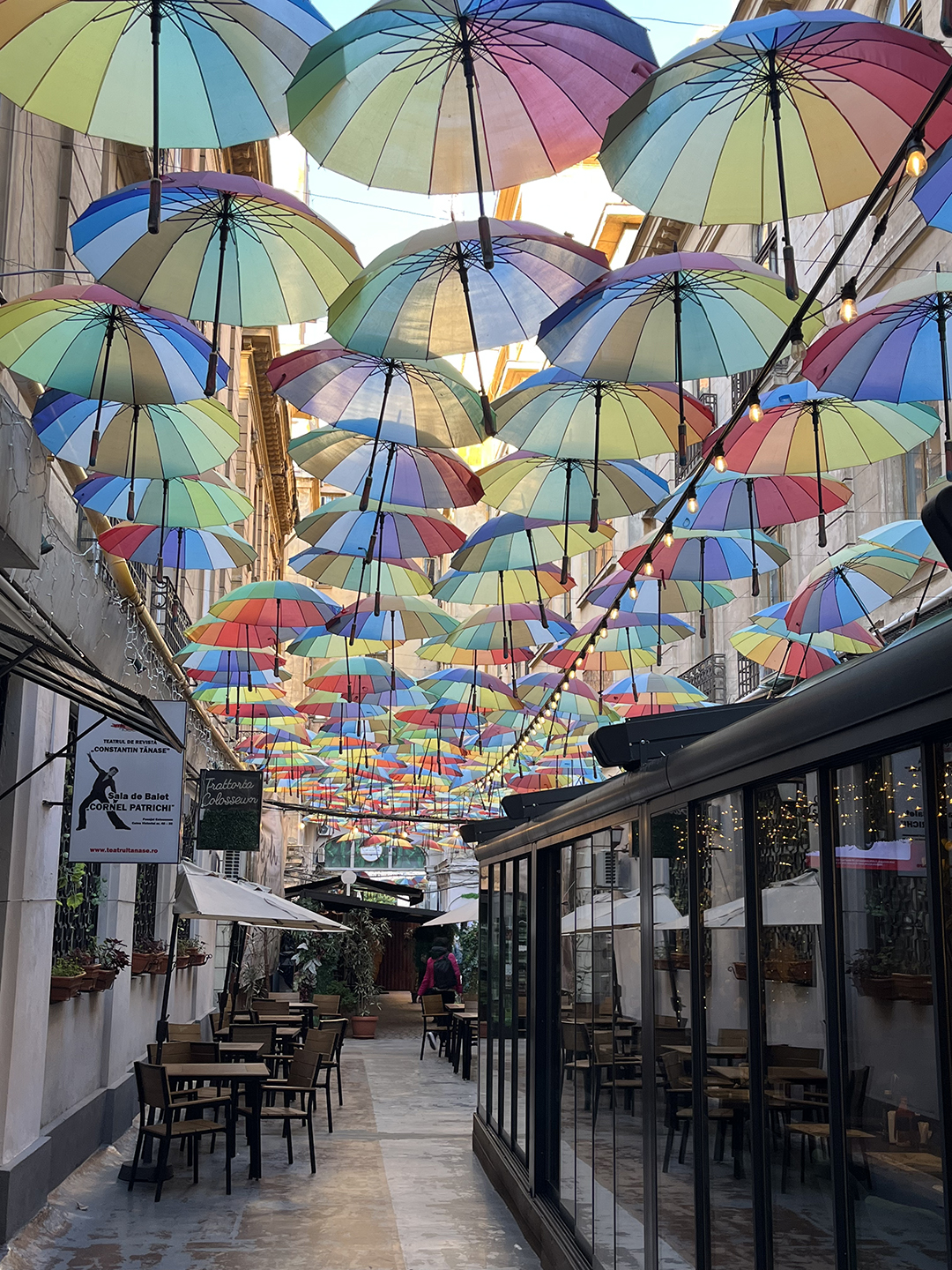
Saturday, October 18th: In an alleyway off Calle Victoriei One is the Umbrella Restaurant. We didn’t eat there but stopped for a photo.
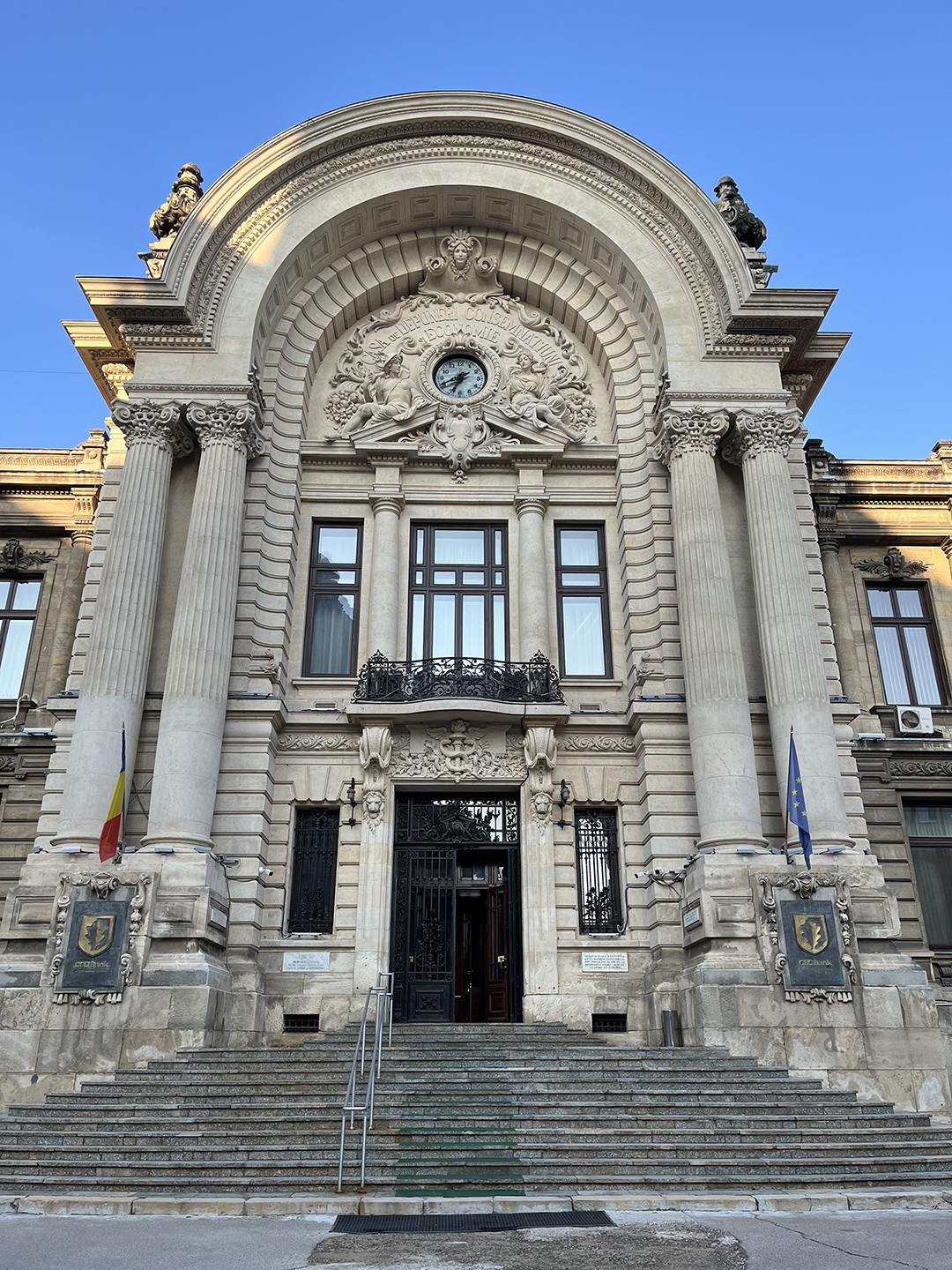
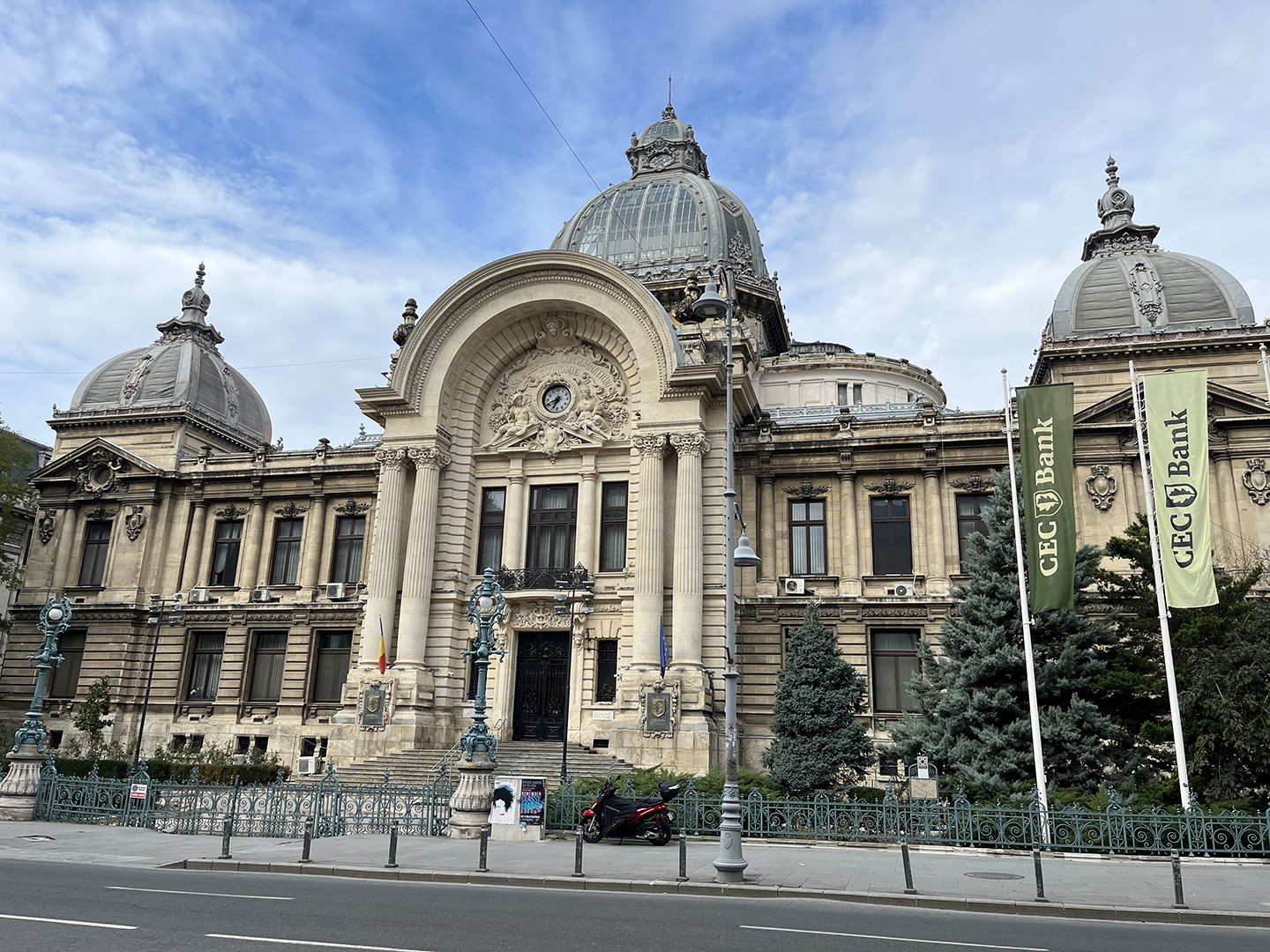
A walking tour of Bucharest with a group from our cruise. Saw the CEC Palace, one of the architectural symbols of the Little Paris, as Bucharest was once known, that has remained today a landmark for the identity of Bucharest.
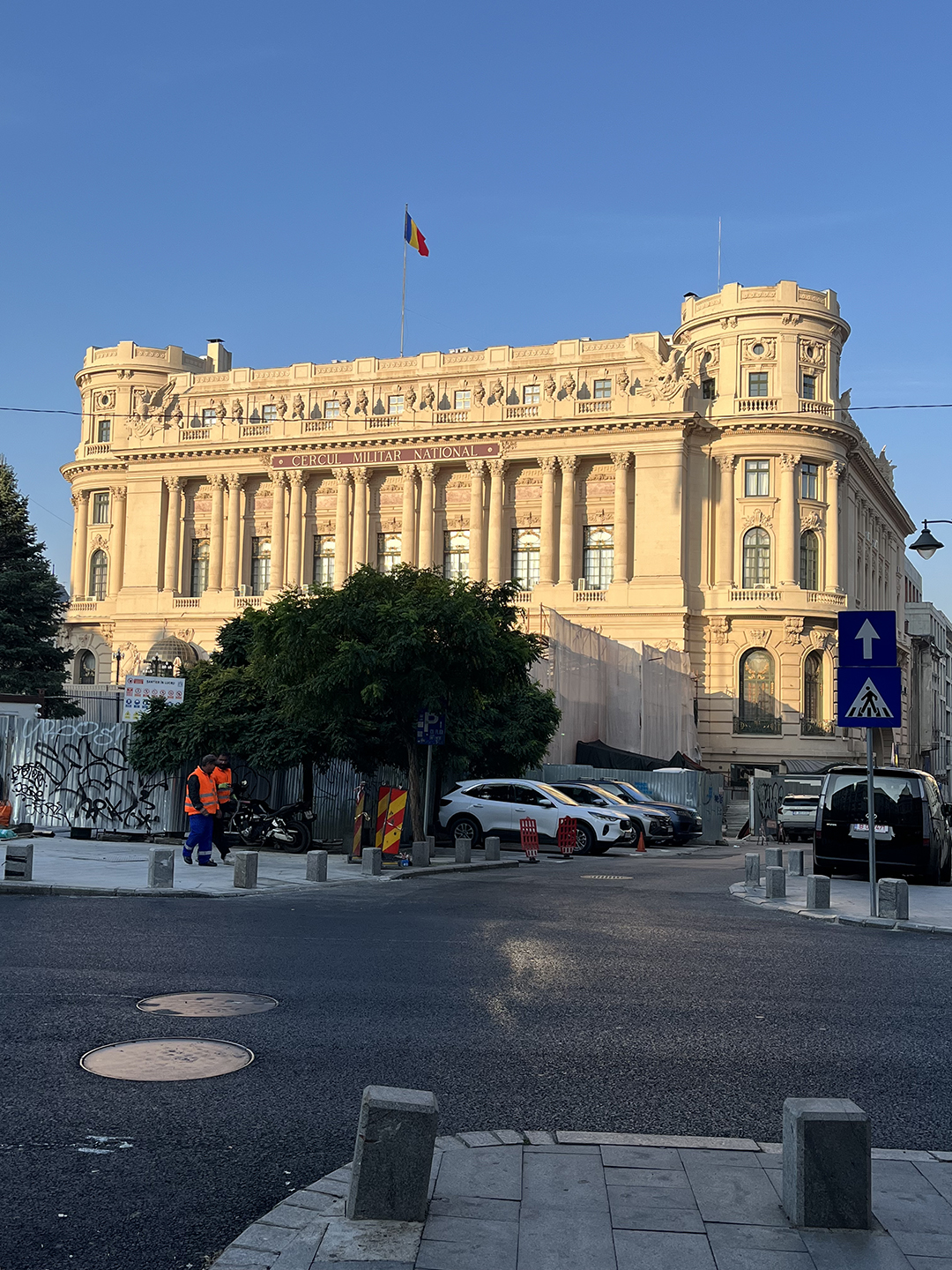
The National Military Club
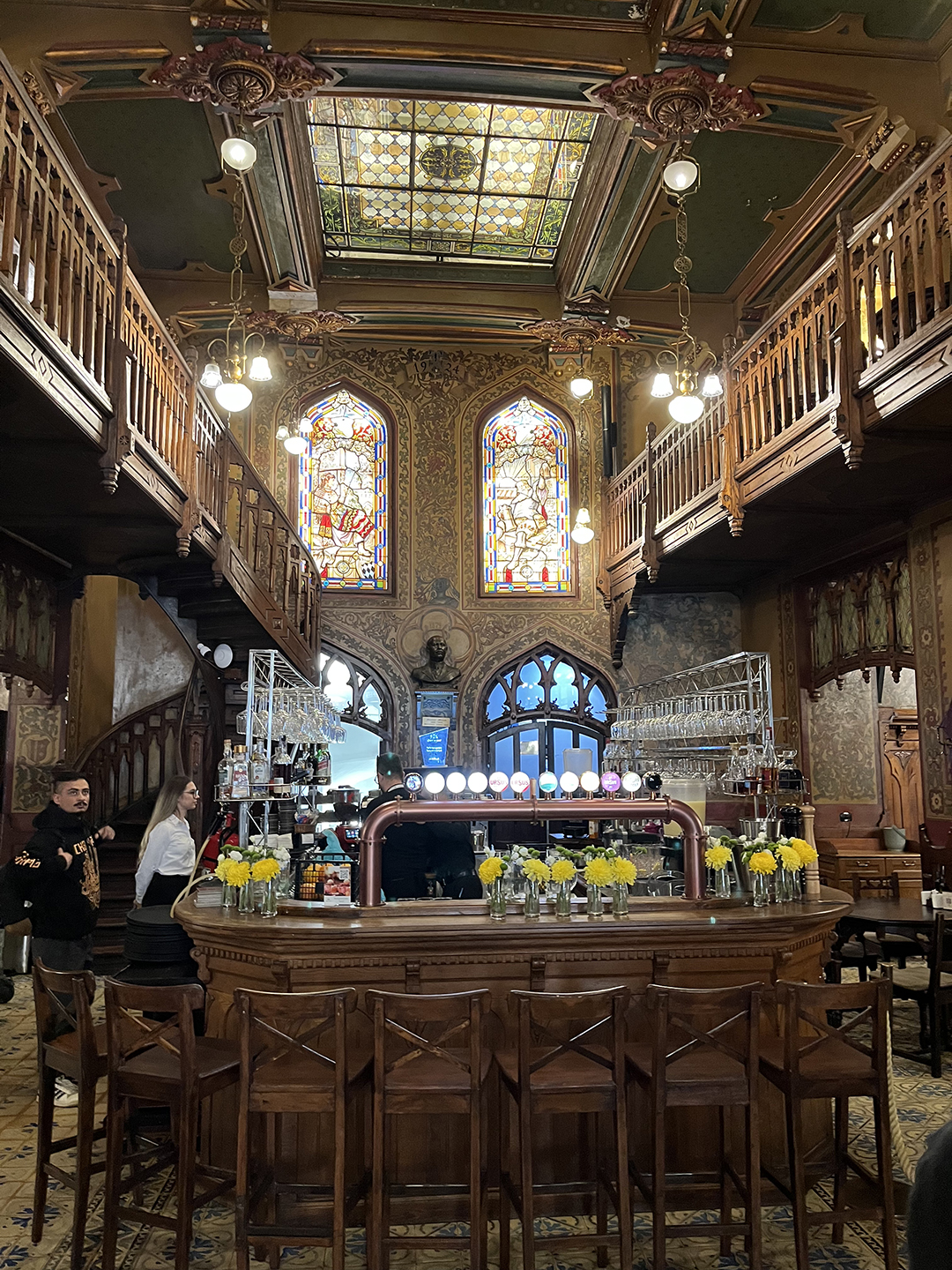
Ancient church now a restaurant
Visited an old church that is now a restaurant and the Palace of the Parliament, the heaviest building in the world – heavier than the Pentagon, heavier than the Pyramids; built by the dictator Ceausescu, it weighs 4.1 million tons. The building was erected with construction materials produced in Romania, amongst which: 1,000,000 cubic metres of marble, 550,000 tons of cement, 700,000 tons of steel, 2,000,000 tons of sand, 1,000 tons of basalt, 900,000 cubic metres of rich wood, 3,500 tons of crystal, 200,000 cubic metres of glass, 2,800 chandeliers, 220,000 square metres of carpets (about the area of the Vatican), and 3,500 square metres of leather.

The People’s Palace
Lunched at a local Greek restaurant. Ordered a bottle of Liliac Sauvignon Blanc 2022, “The Wine of Transylvania.”
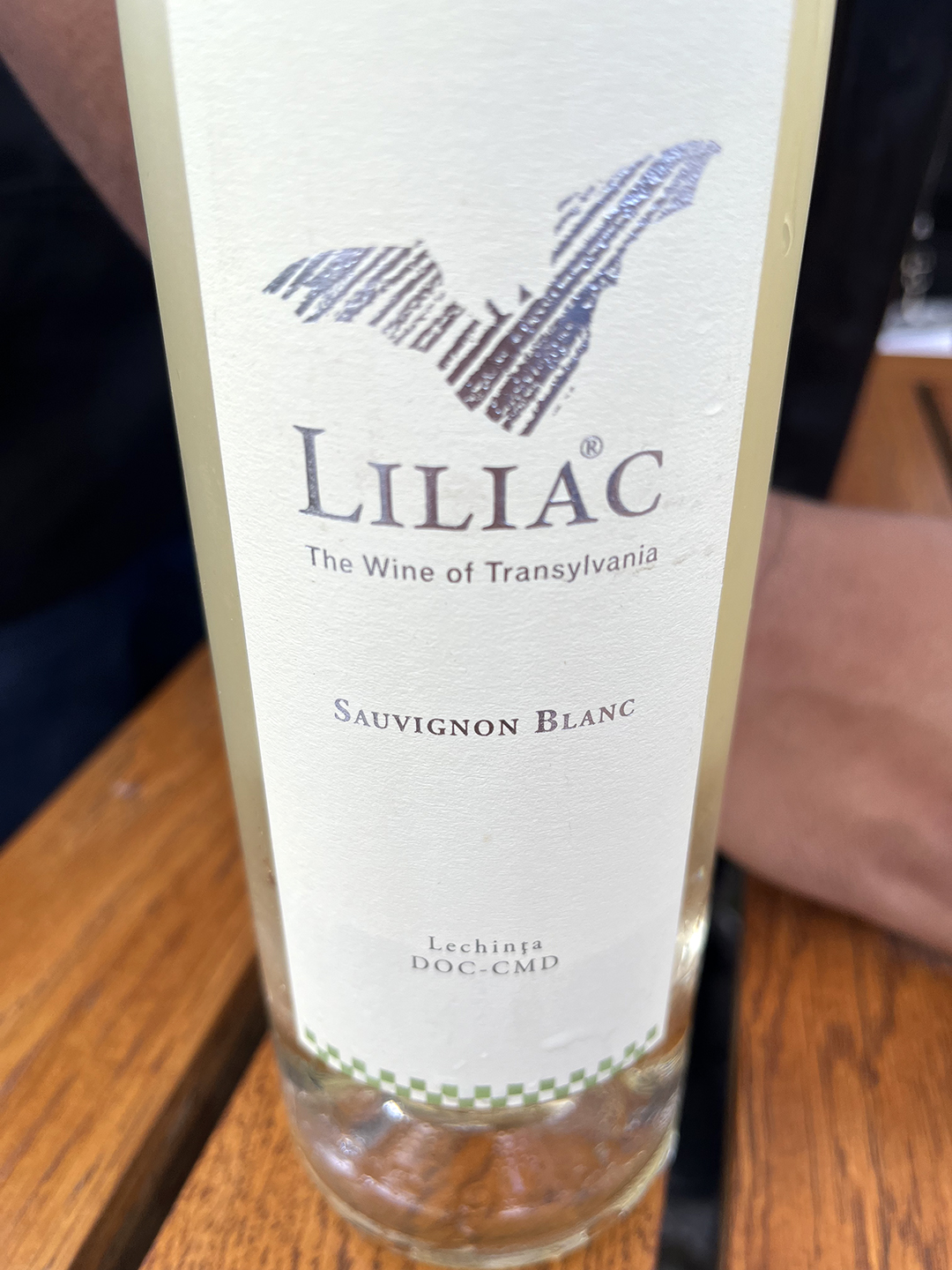
Great with Greek food!
Joined our old Toronto friend Zoltan Szabo (now residing in Transylvania) for dinner at Gastrolab, a cross between an amazing wine shop and high-class restaurant.
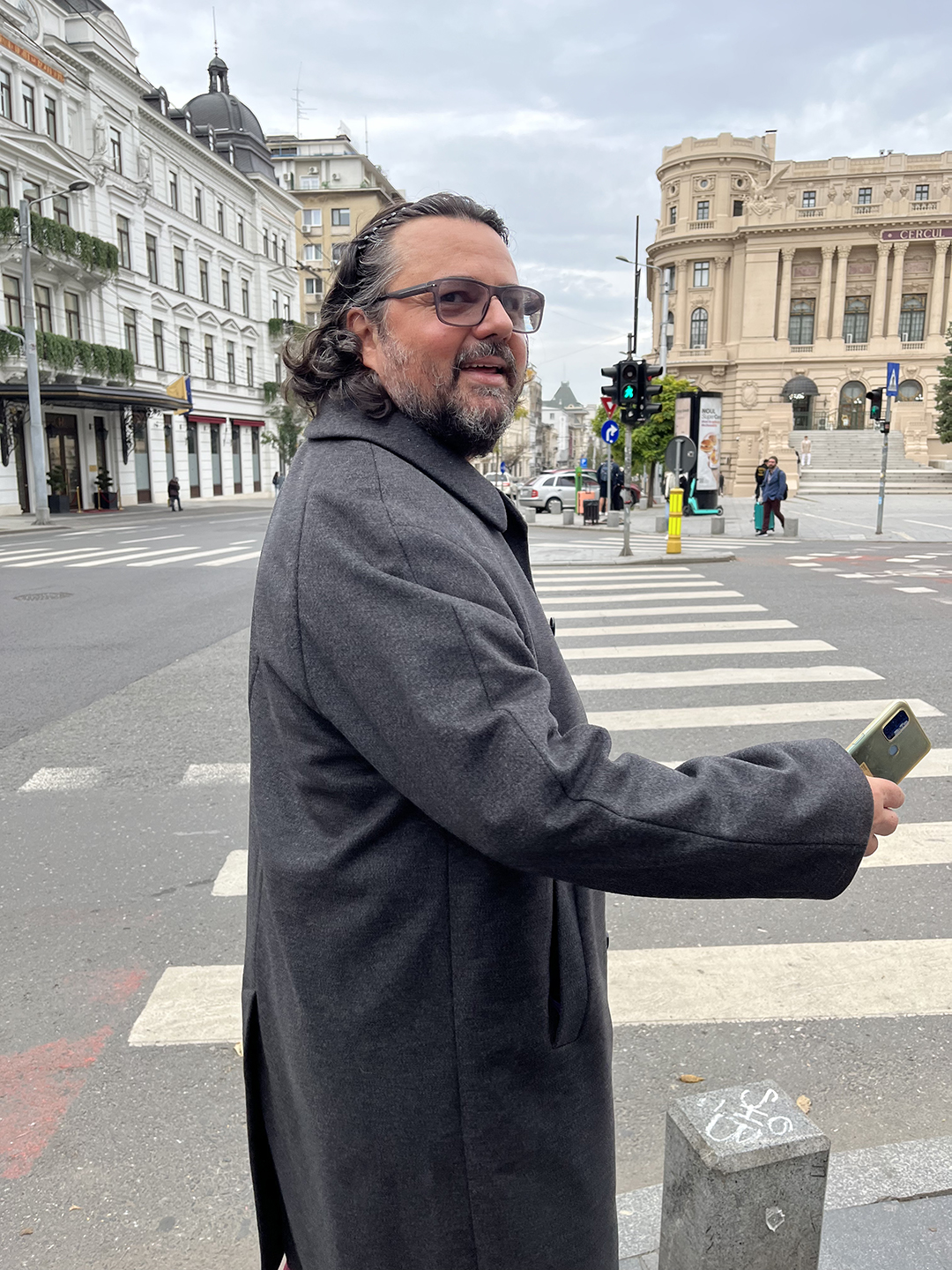
The unbelievable Zoltan Szabo

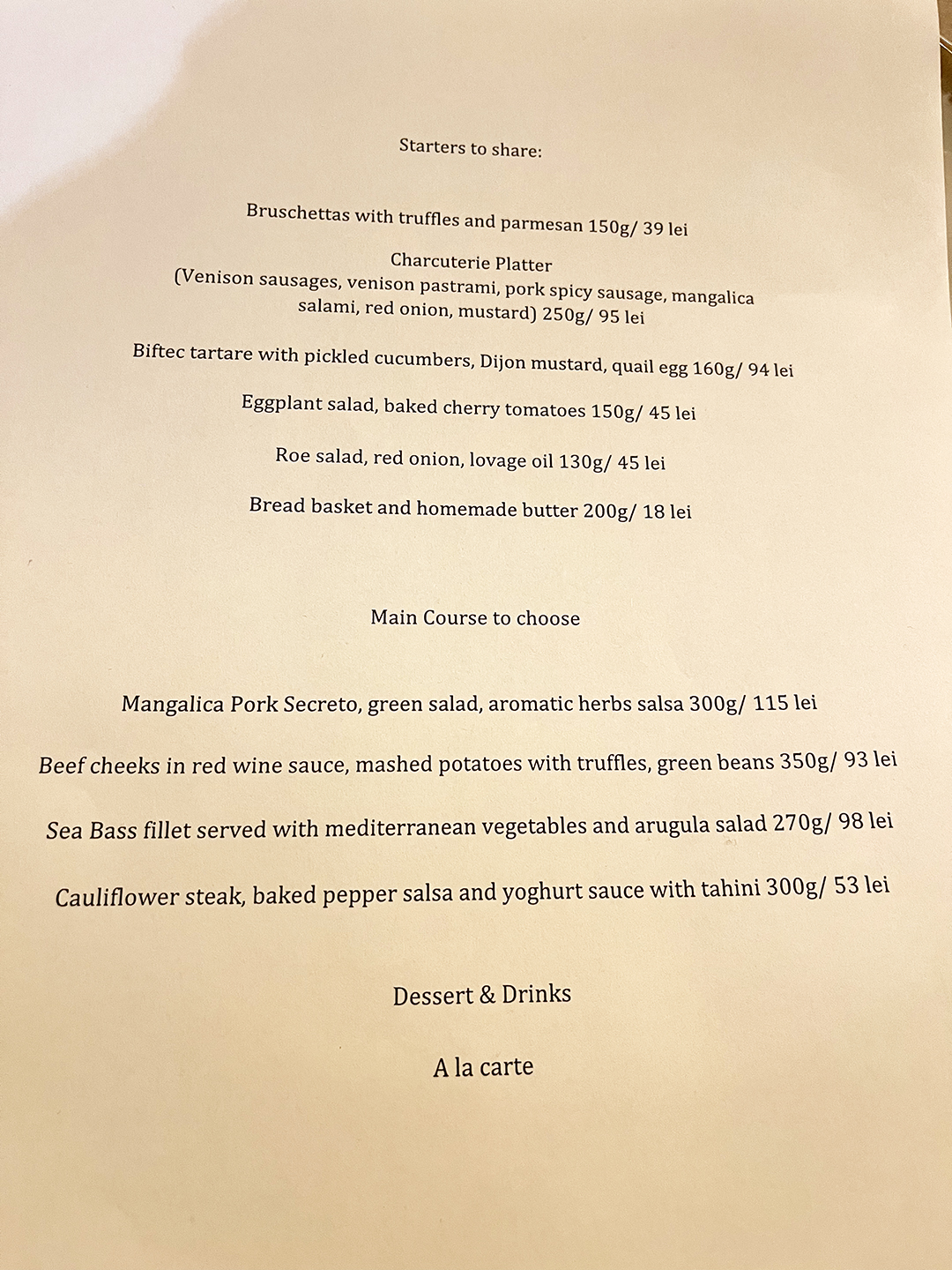
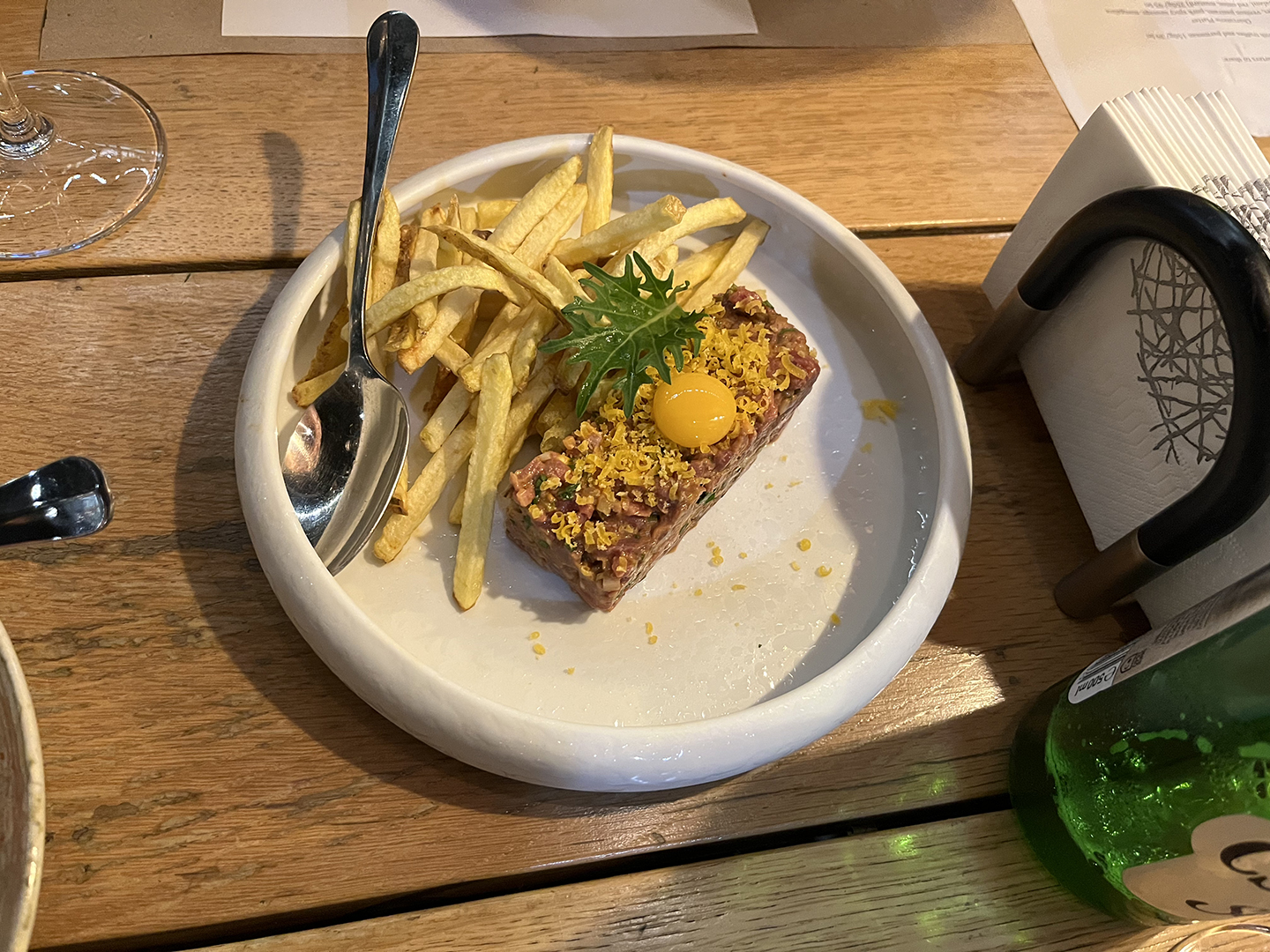


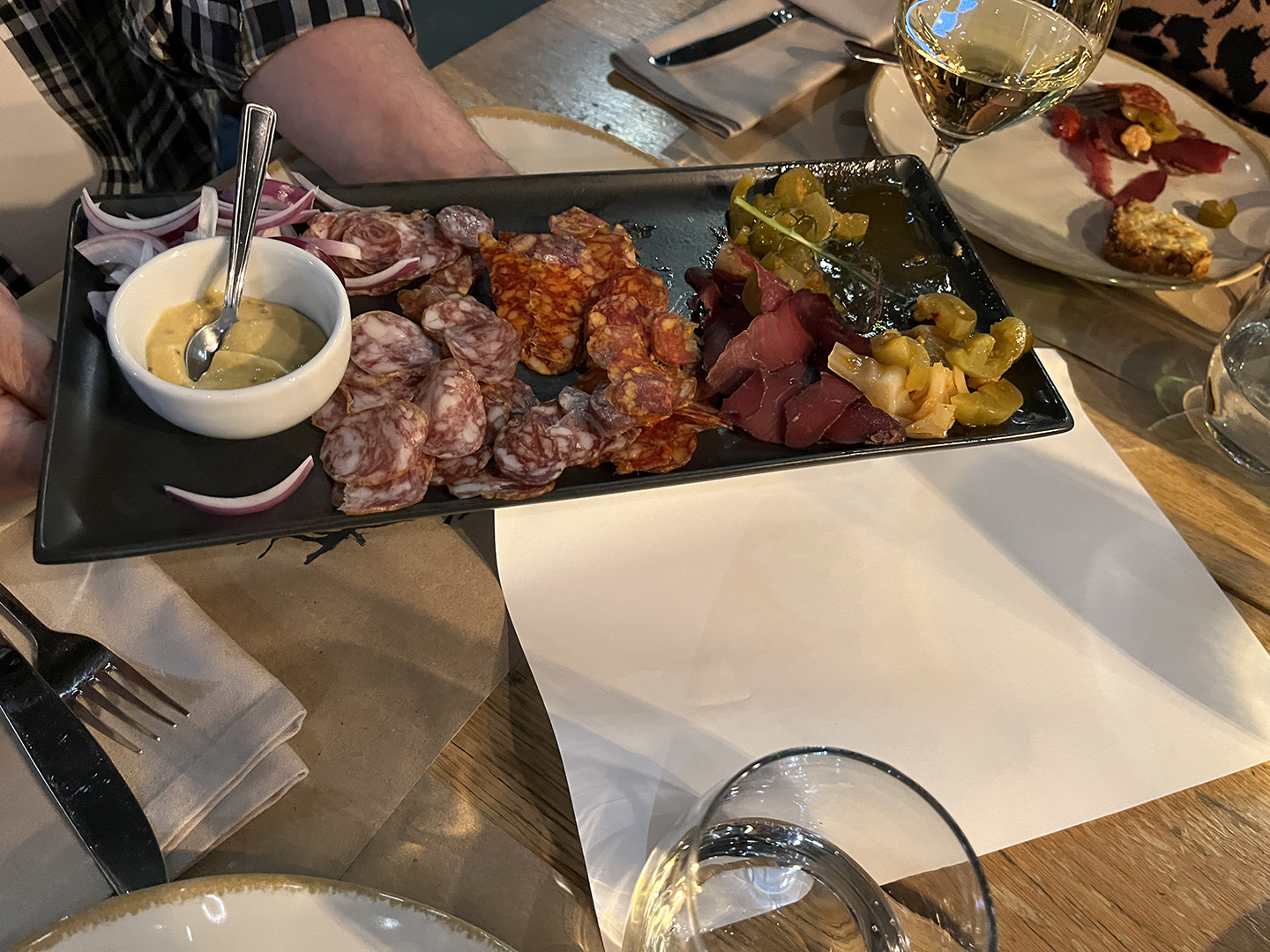
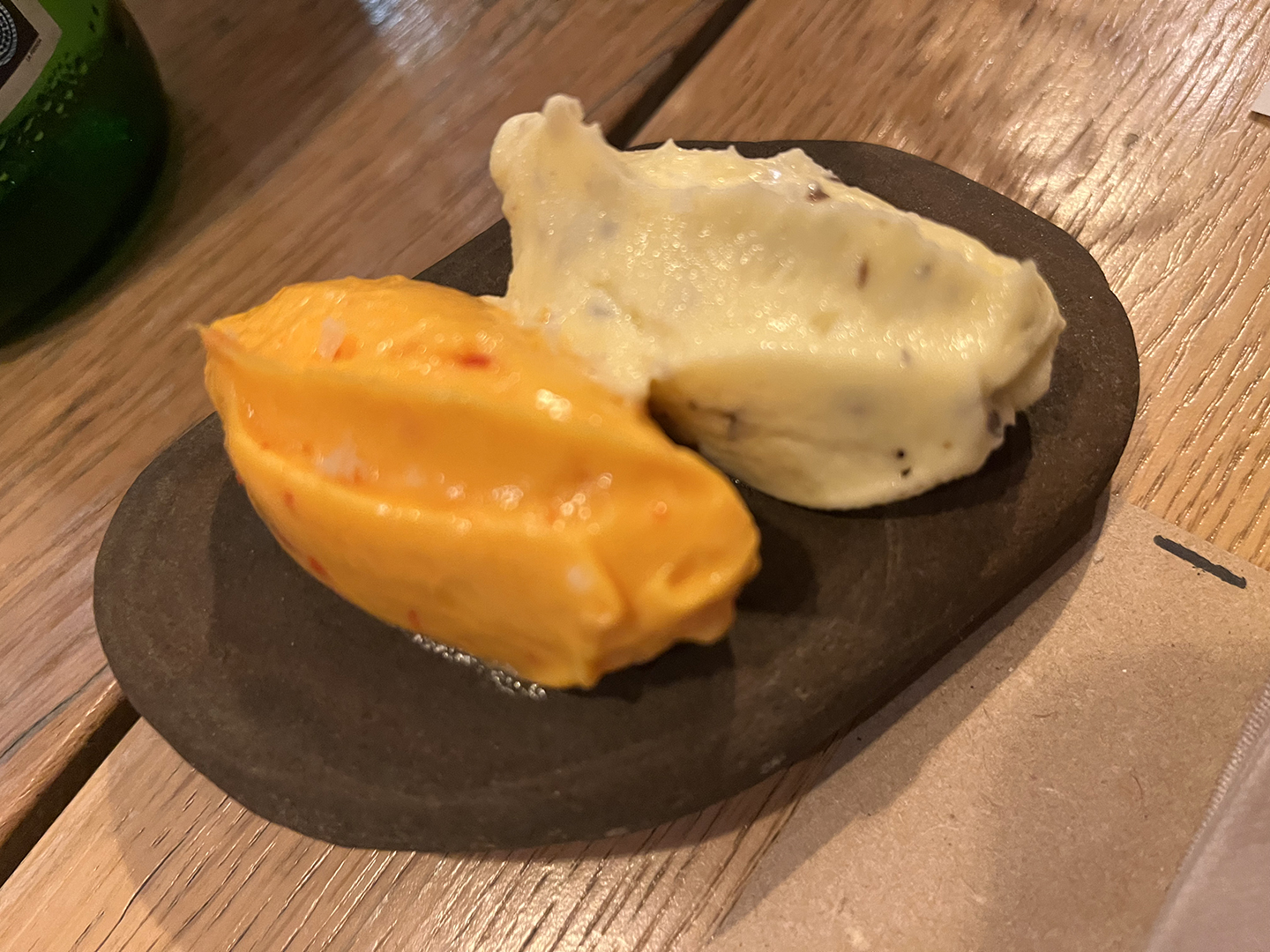
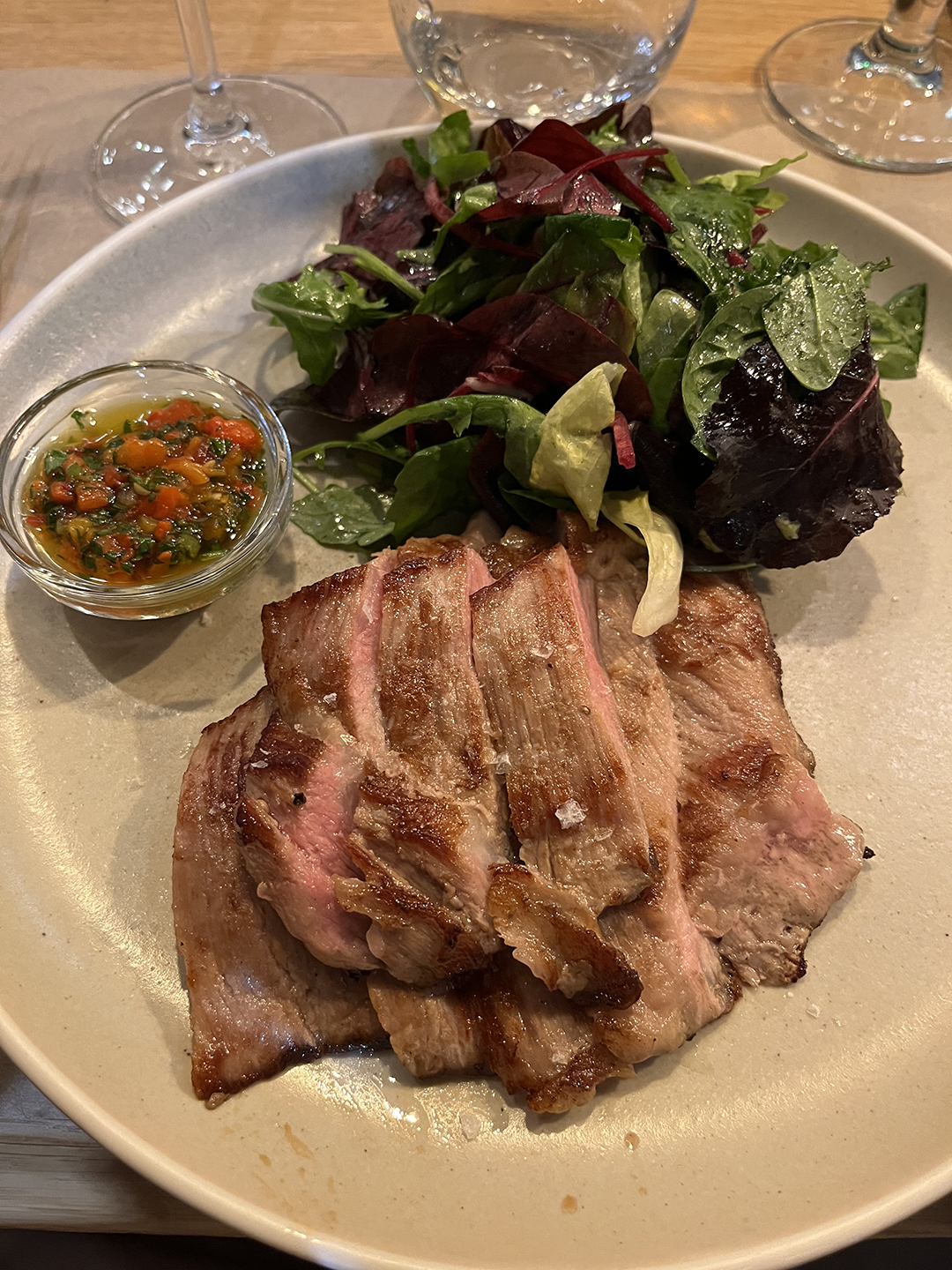

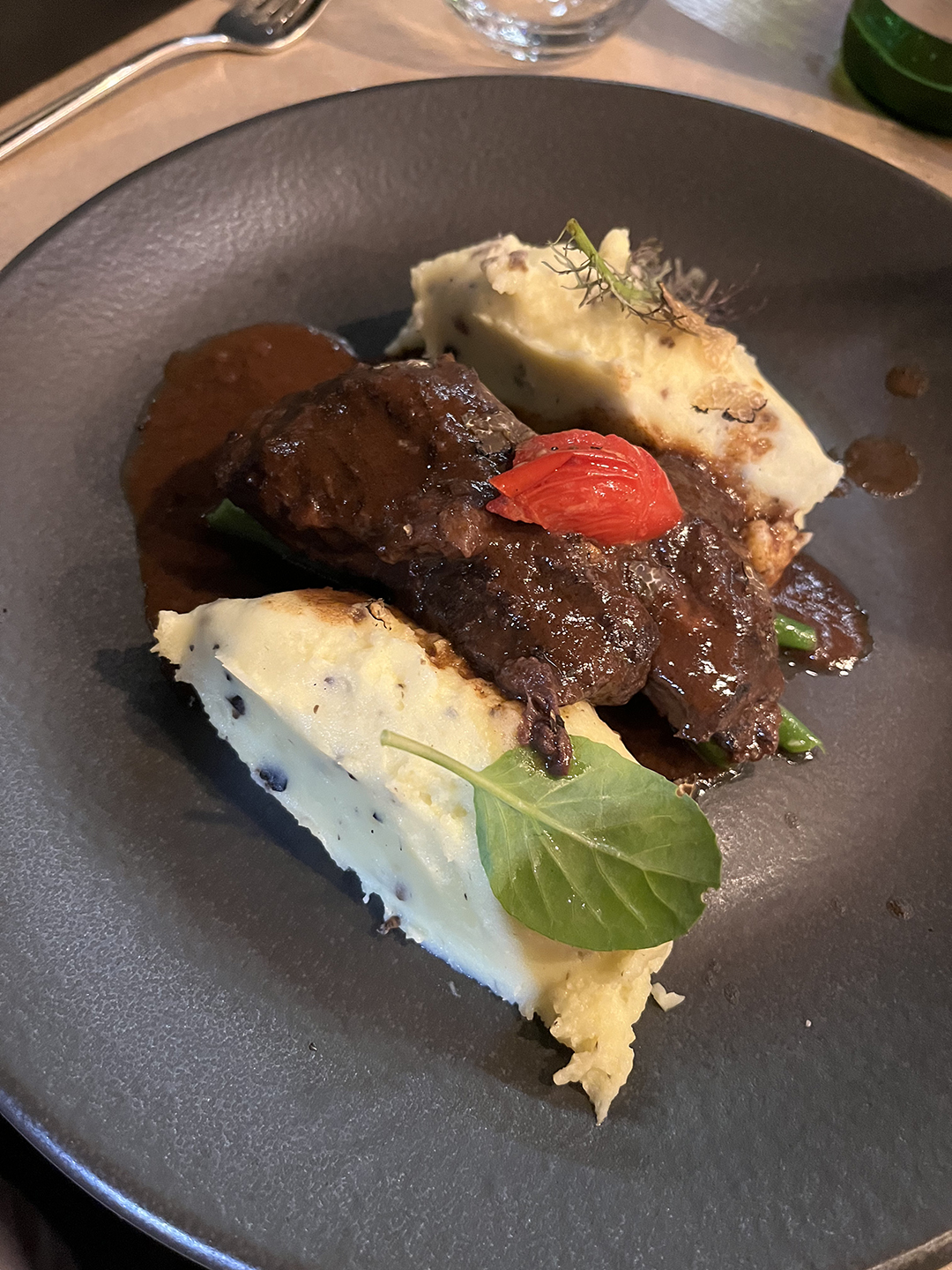
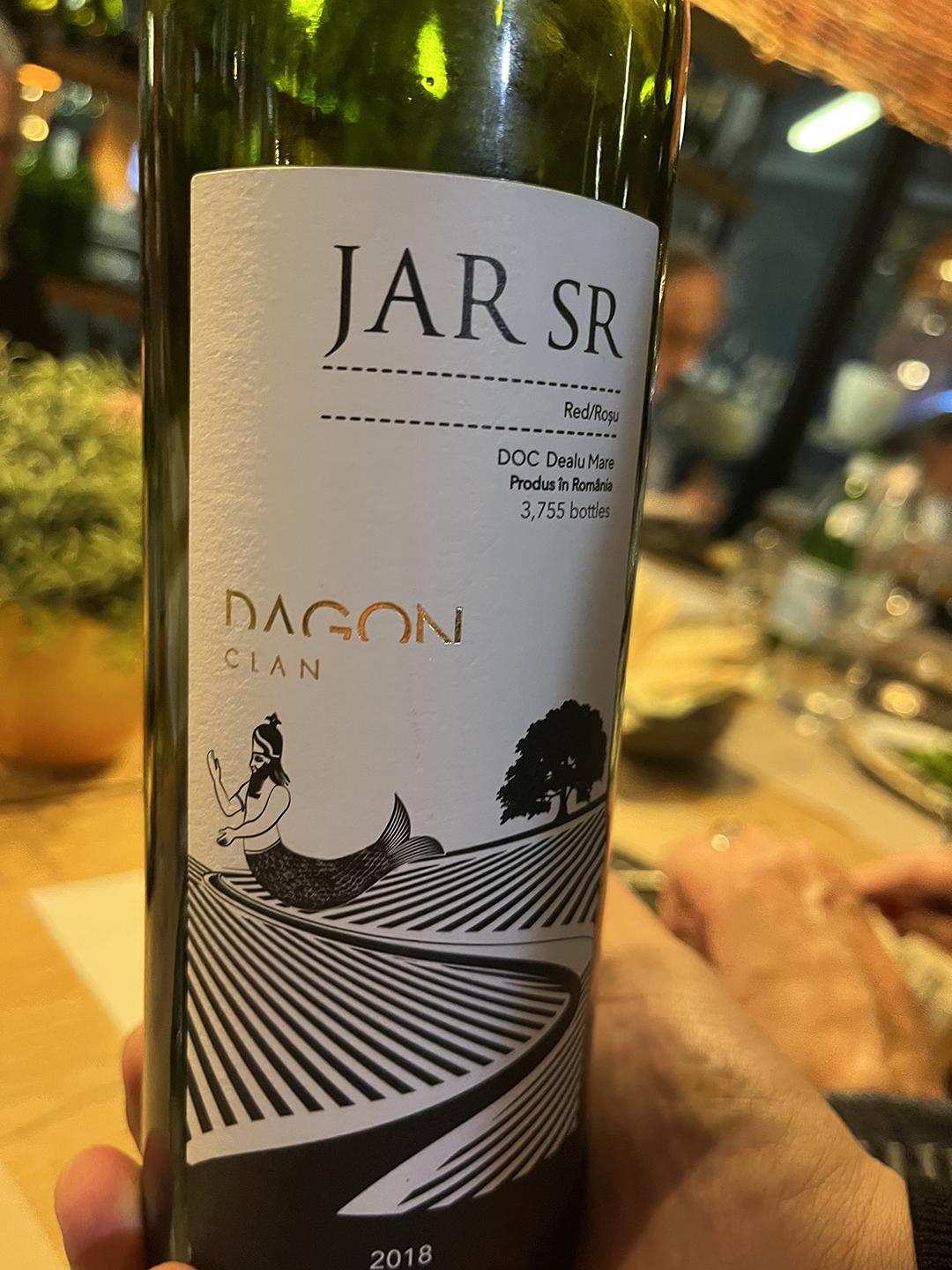
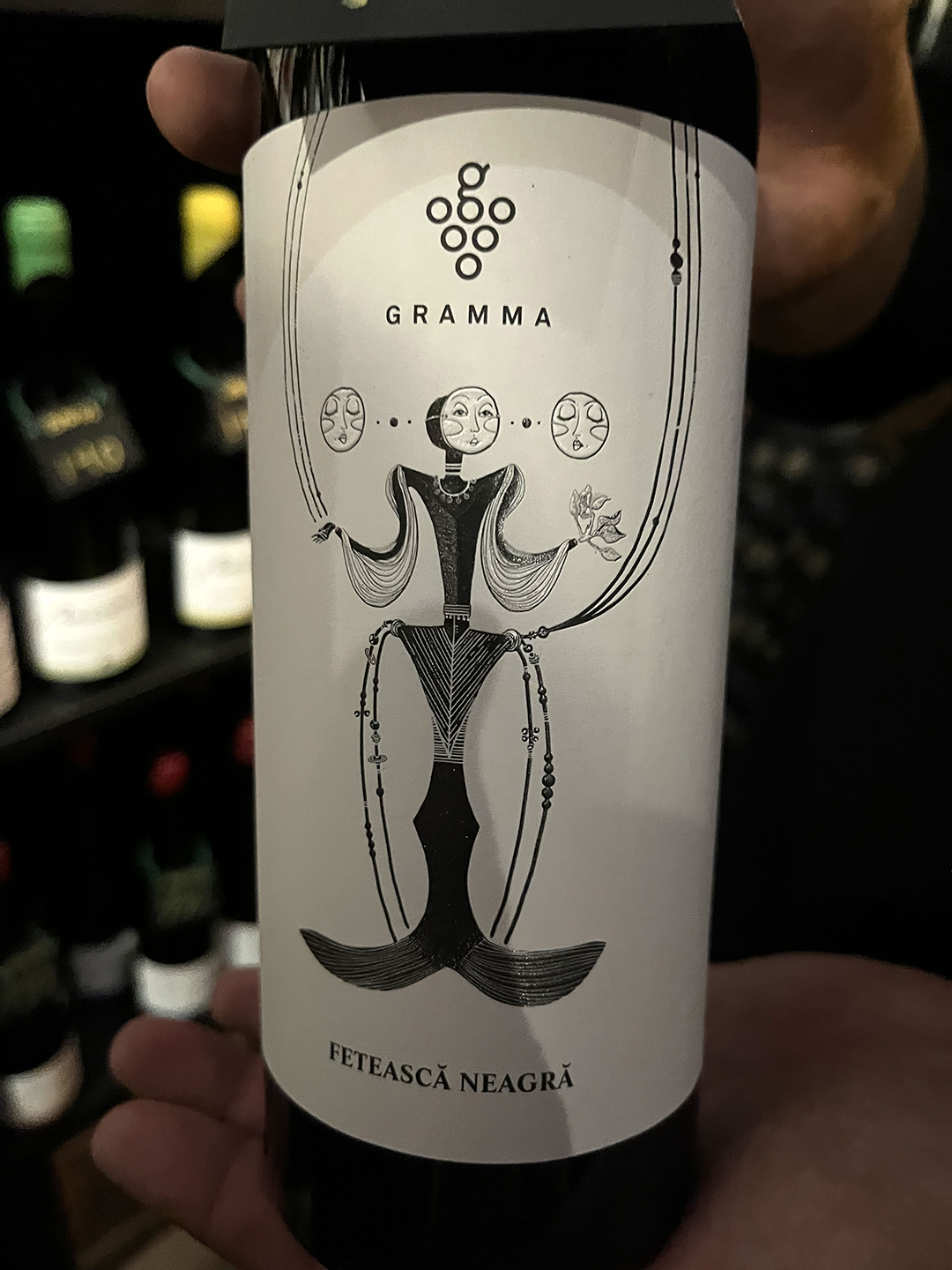
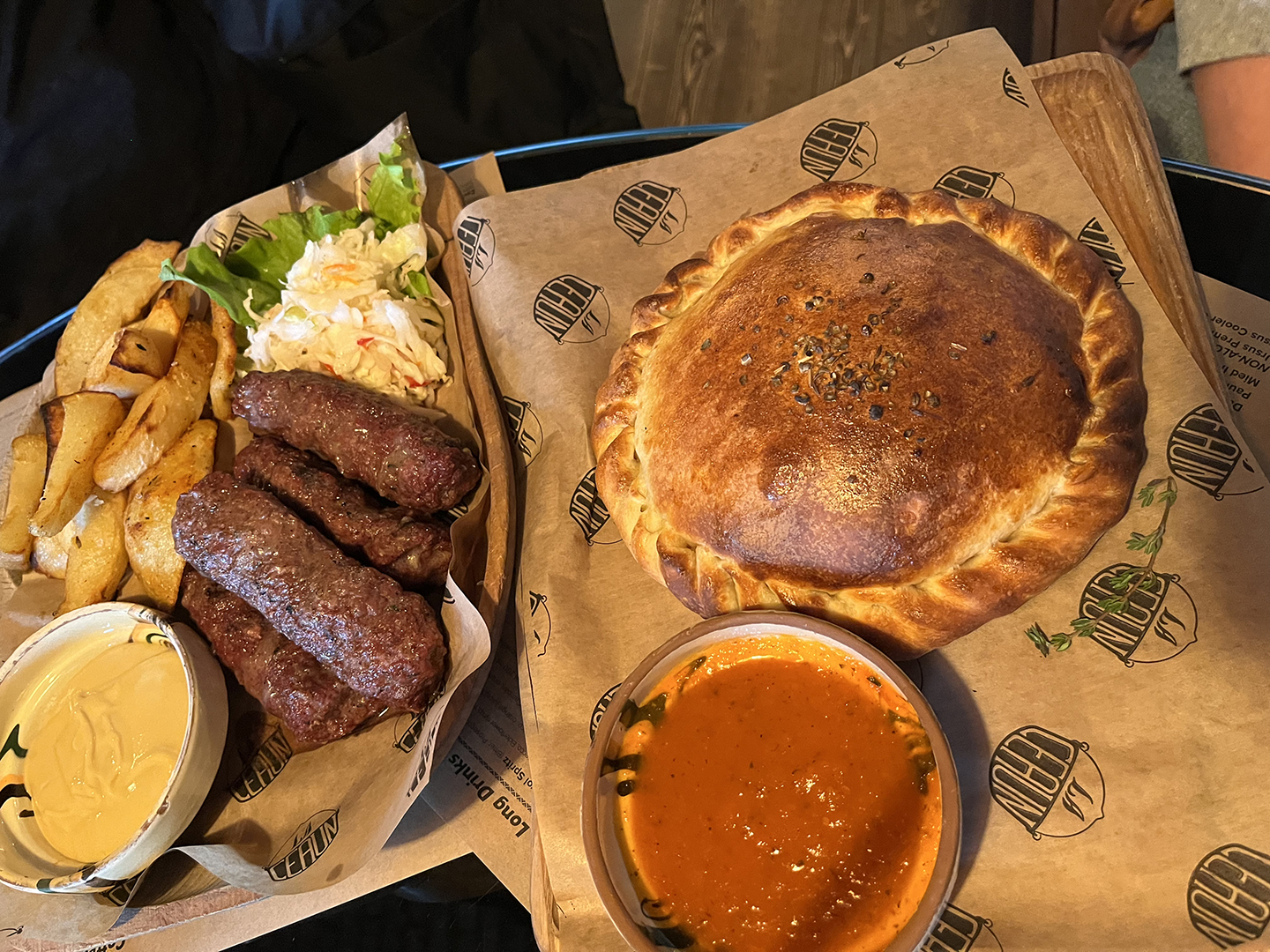
Sunday, October 19th: A bus tour for our group to Brașov, where we lunched prior to a visit to Bran Castle, the home of Vlad the Impaler (Dracula). Lunch at La Ceaun on Brașov’s main square, typical Romanian country fare.
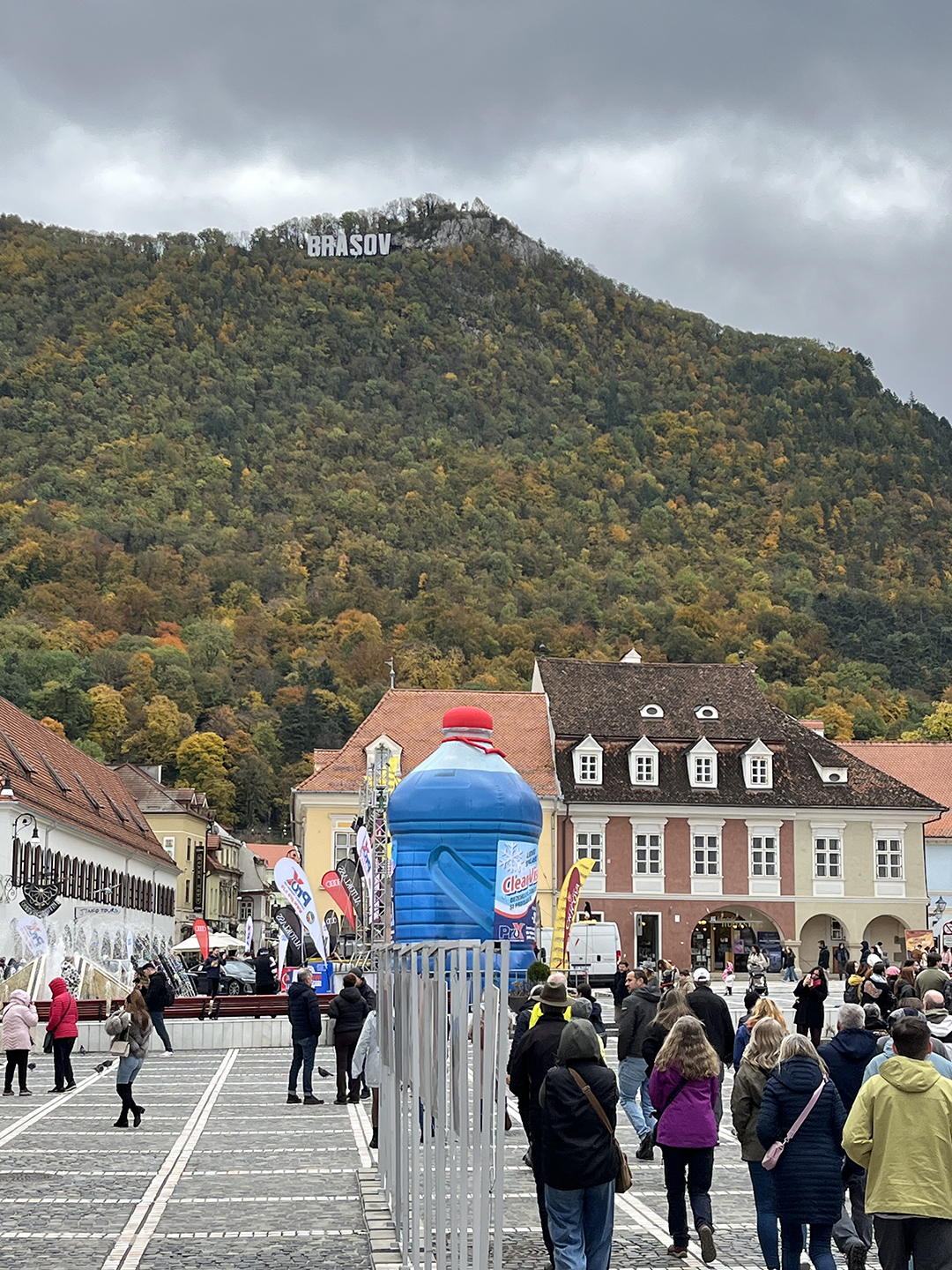
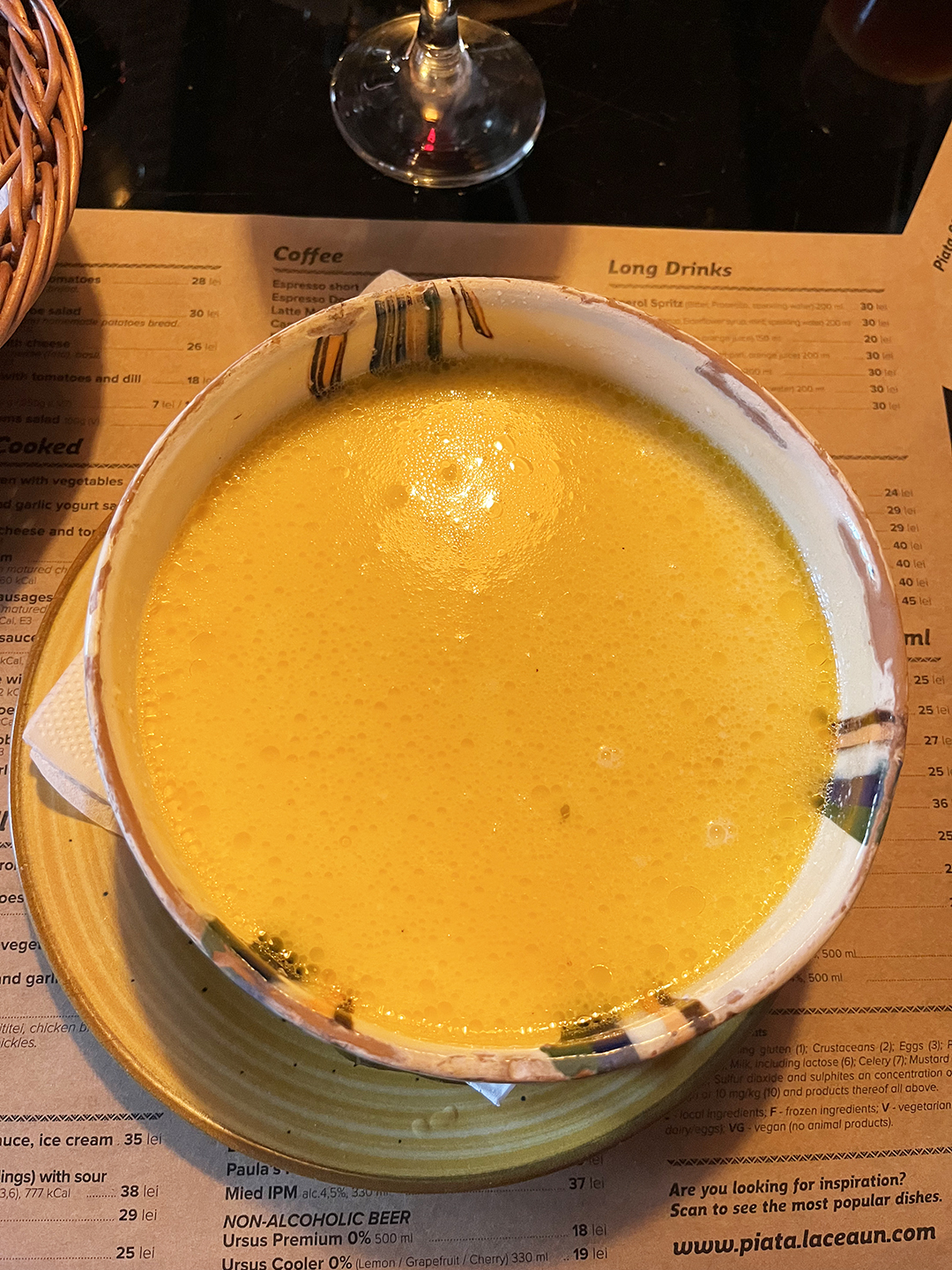
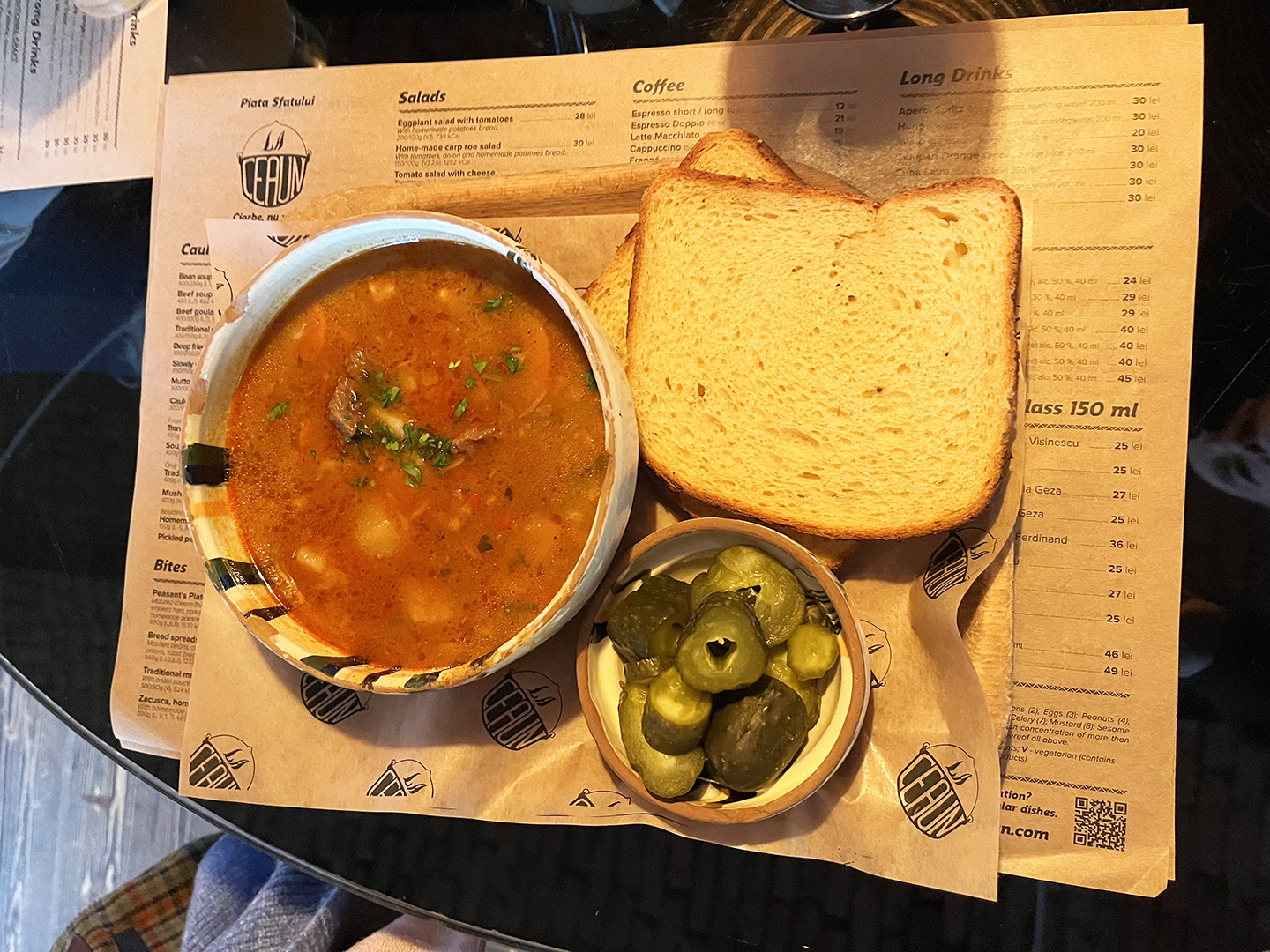
After lunch, a visit to Vlad’s castle in Bran, 25 kilometres southwest of Brașov. The castle was built by Saxons in 1377 who were given the privilege by Louis I of Hungary. It is a national monument and landmark in Transylvania. The fortress is on the Transylvanian side of the historical border with Wallachia, on road DN73.
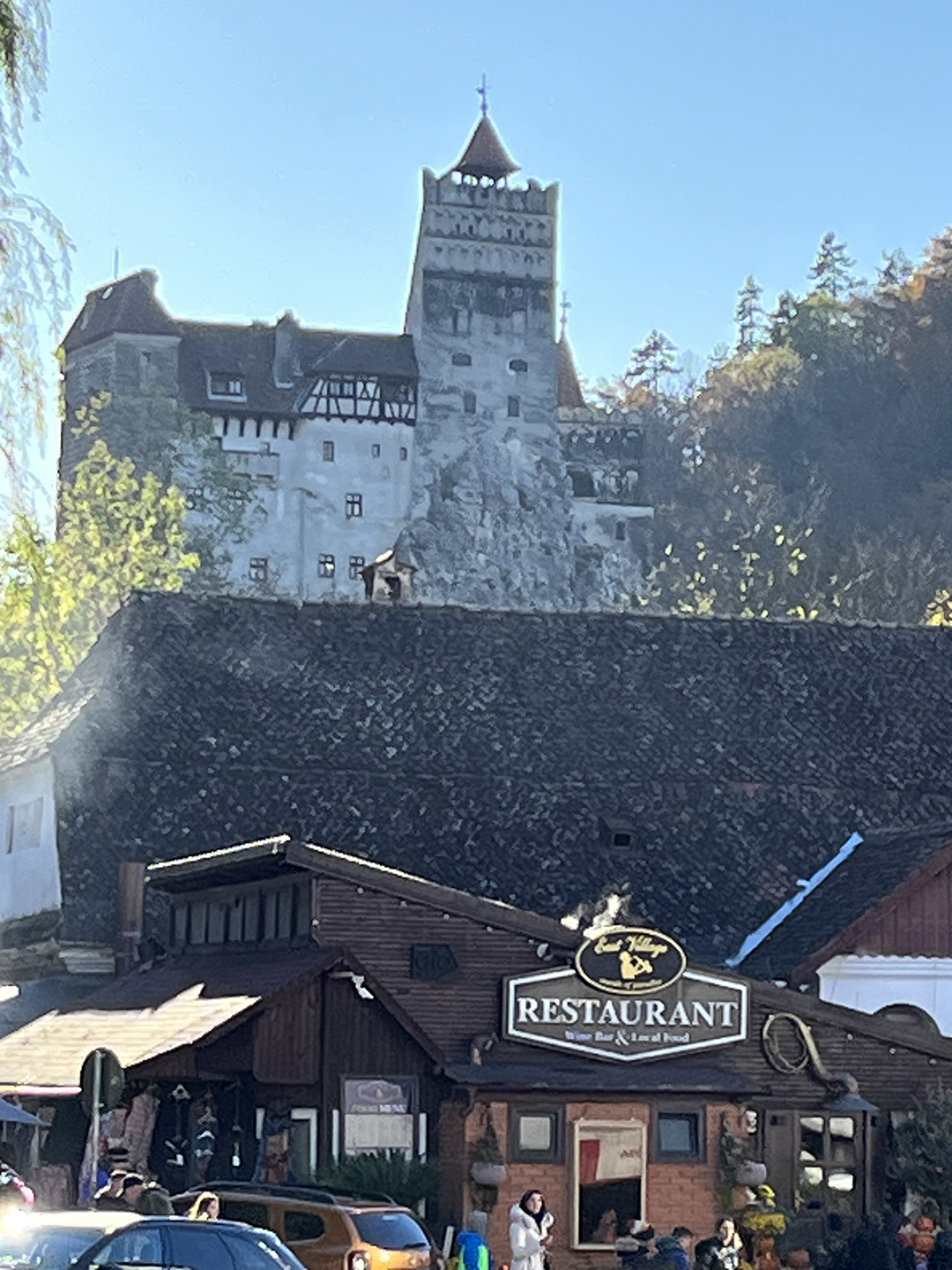
Bran Castle
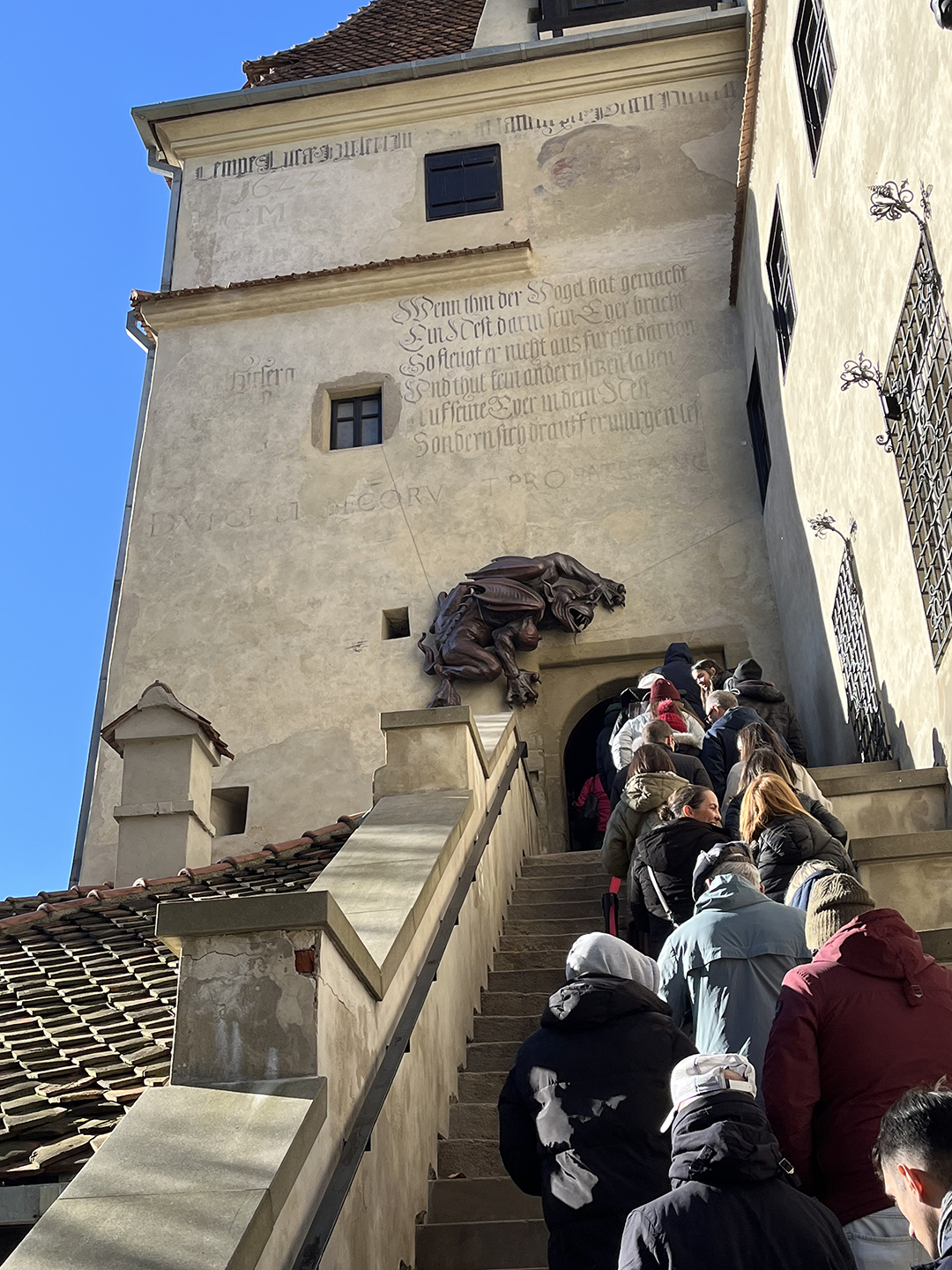
Entering the castle
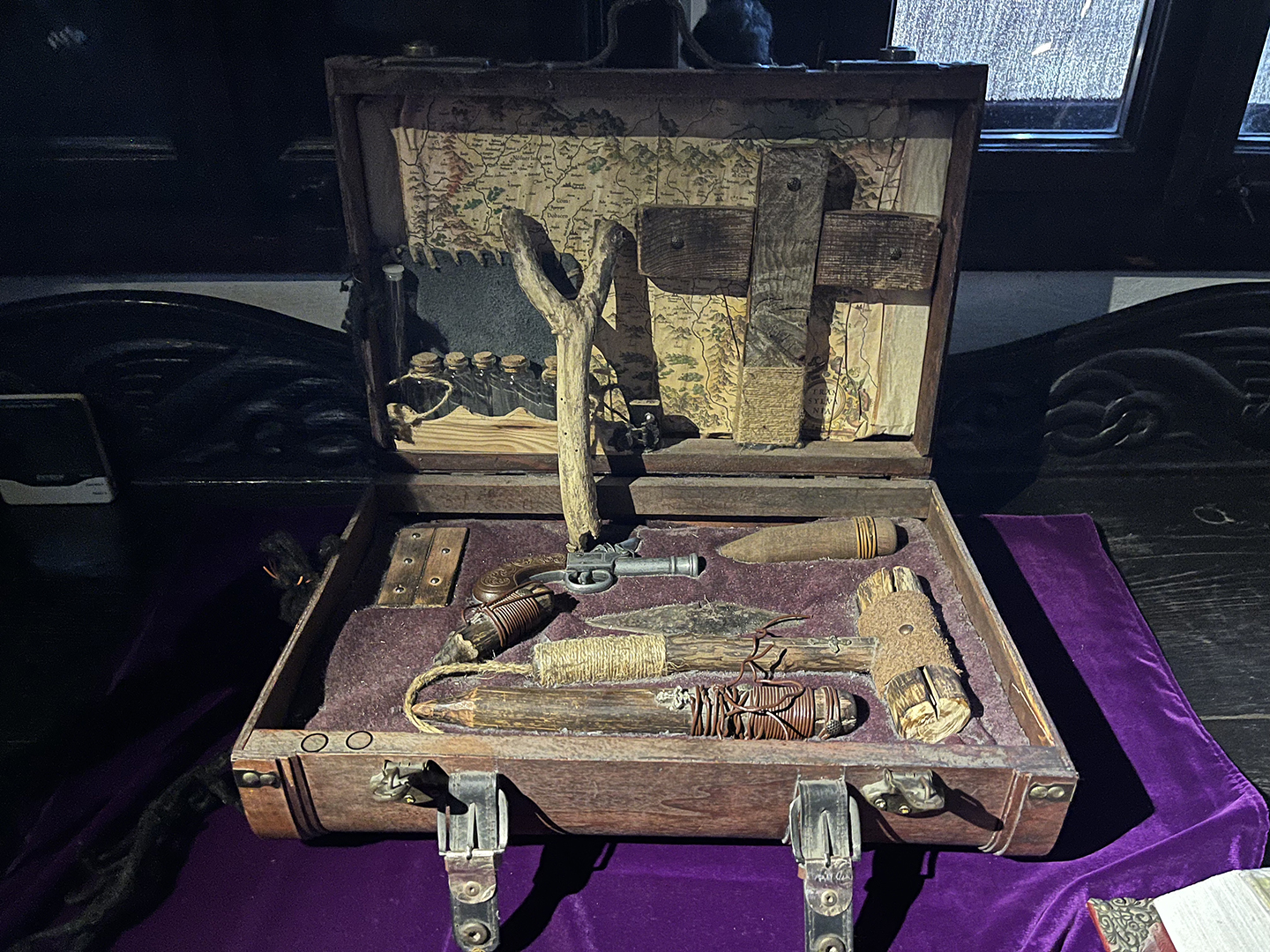
Travelling anti-vampire kit (don’t leave home without it)
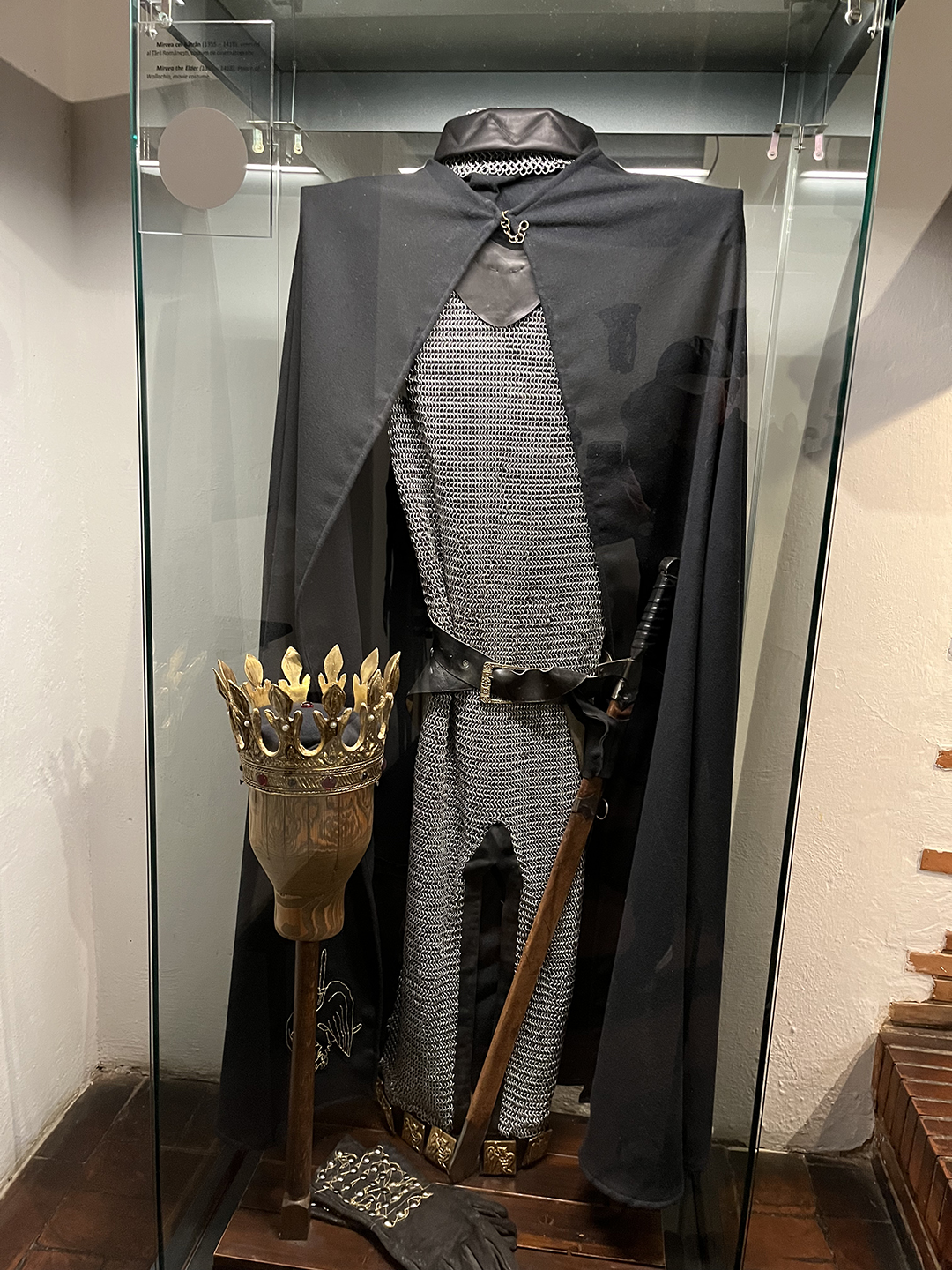
Vlad’s Hallowe’en costume
Dined, simply, at Winestones on a selection of dips – with a glass of Bauer Chardonnay 2024.
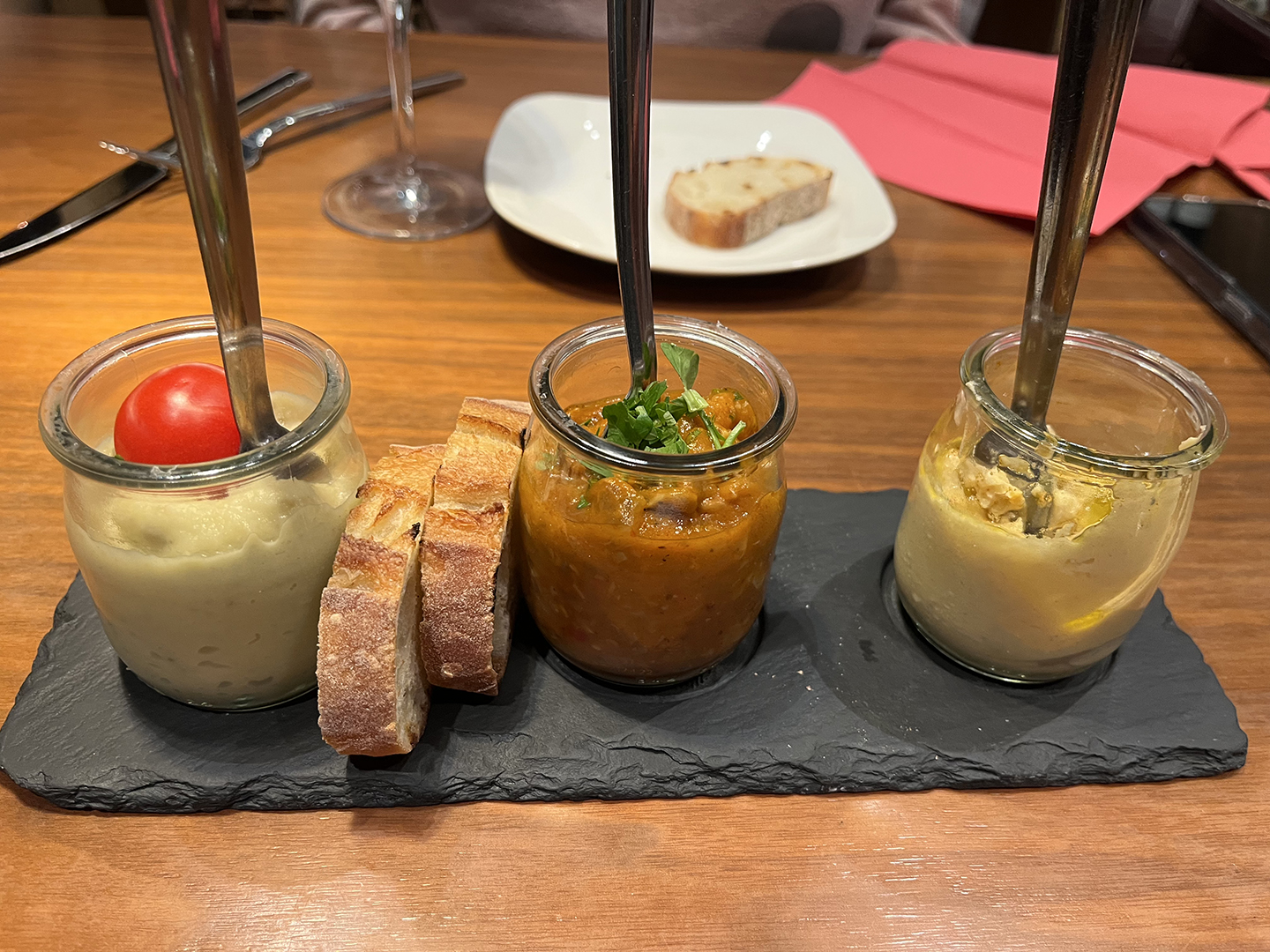
A snack at Winestone
Monday, October 20th: En route for the cruise embarkation point in Giurgiu, we stopped for a tour of Comana, a monastery, a fifty-minute drive south of Bucharest. The original Comana Monastery was founded and built by Vlad Țepeș (Vlad the Impaler) in 1461 as a monastery-fortress. During archeological work performed in the 1970s, a headless body, which may be that of Vlad Țepeș was discovered on the grounds of the current monastery. Historian Constantin Rezachevici and others believe that he may have been buried here, near the battlefield where he was killed.
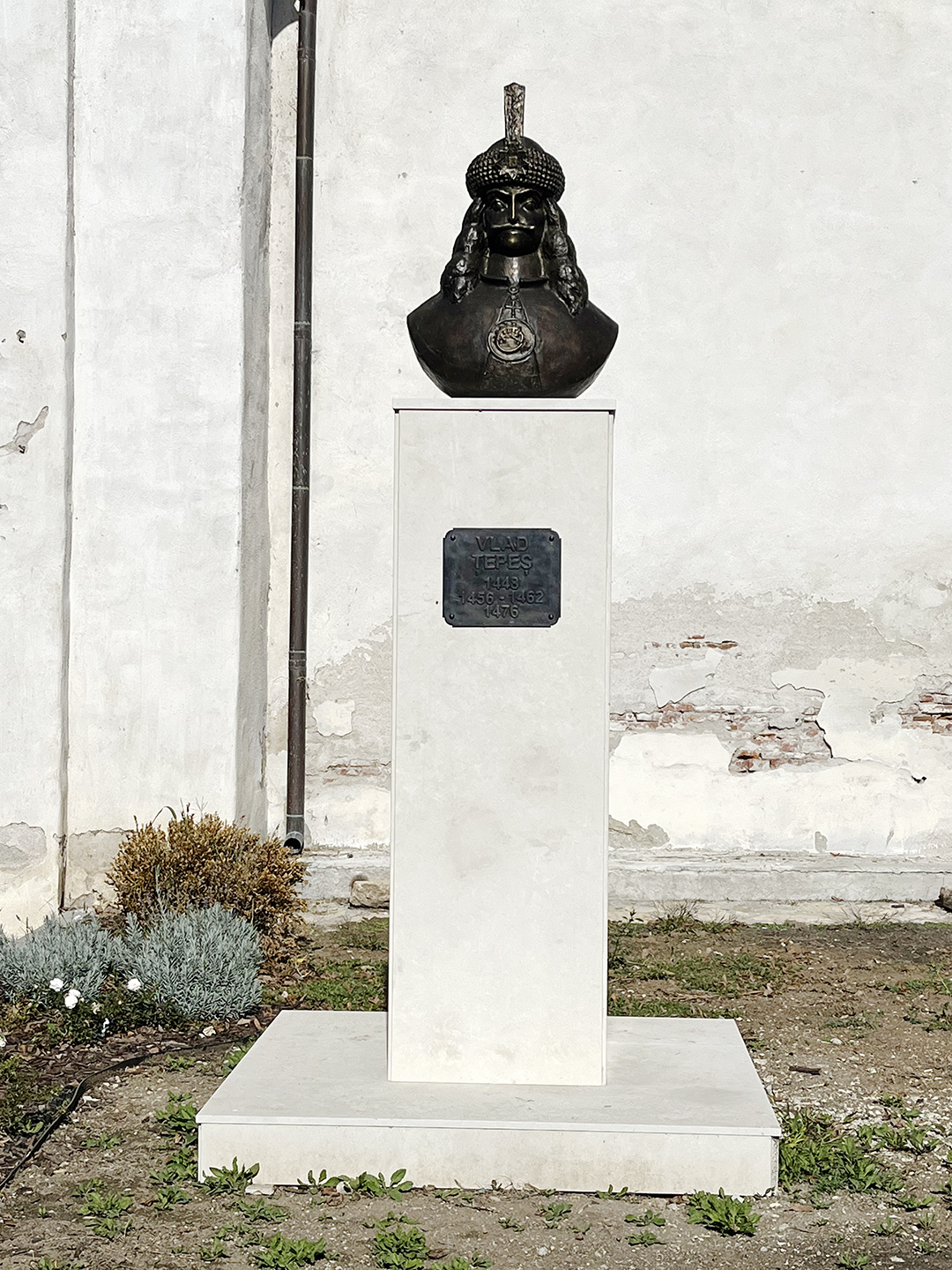
Grave marker of Vlad the Impaler (Dracula)
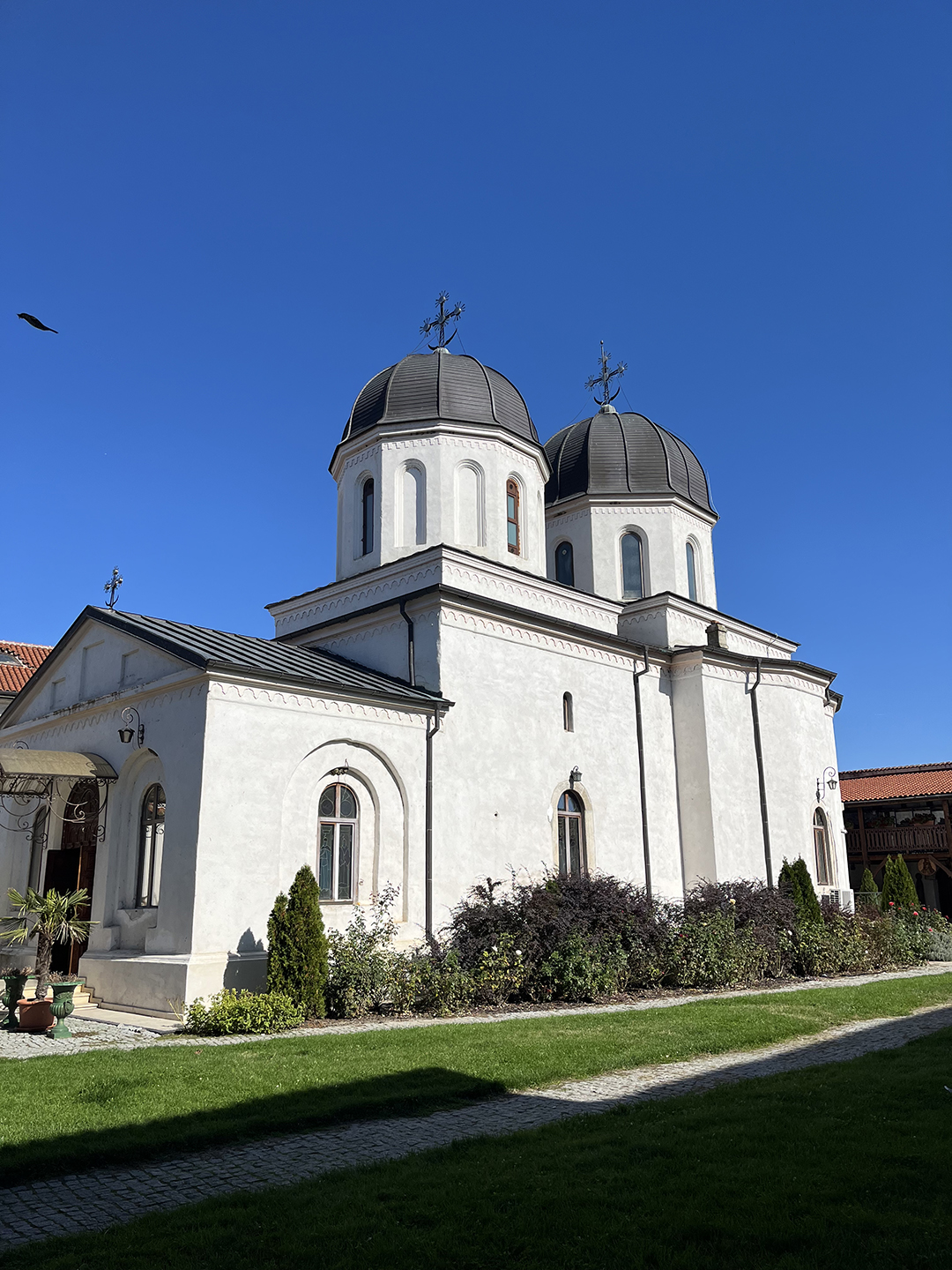
Comana Monastery

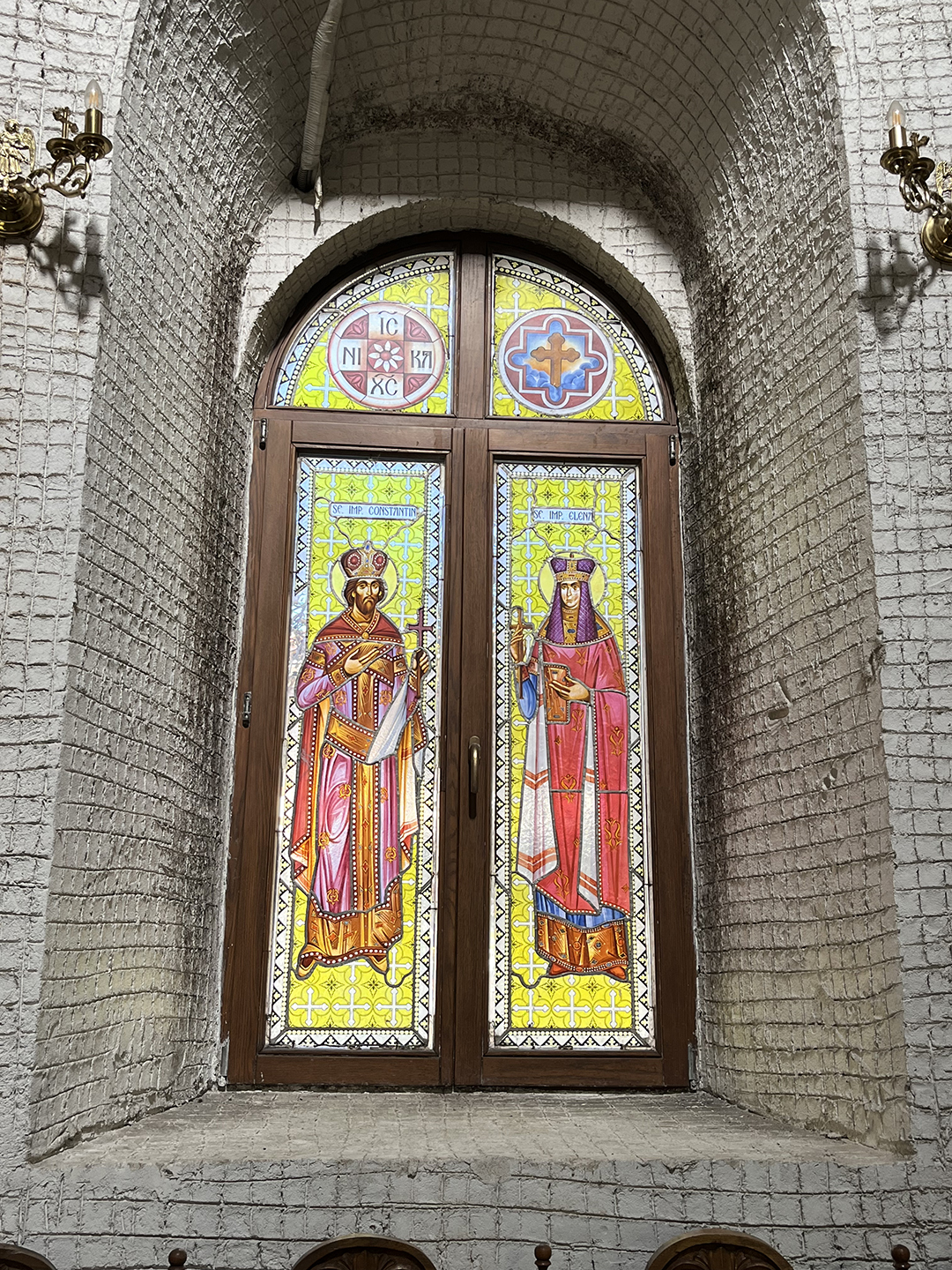
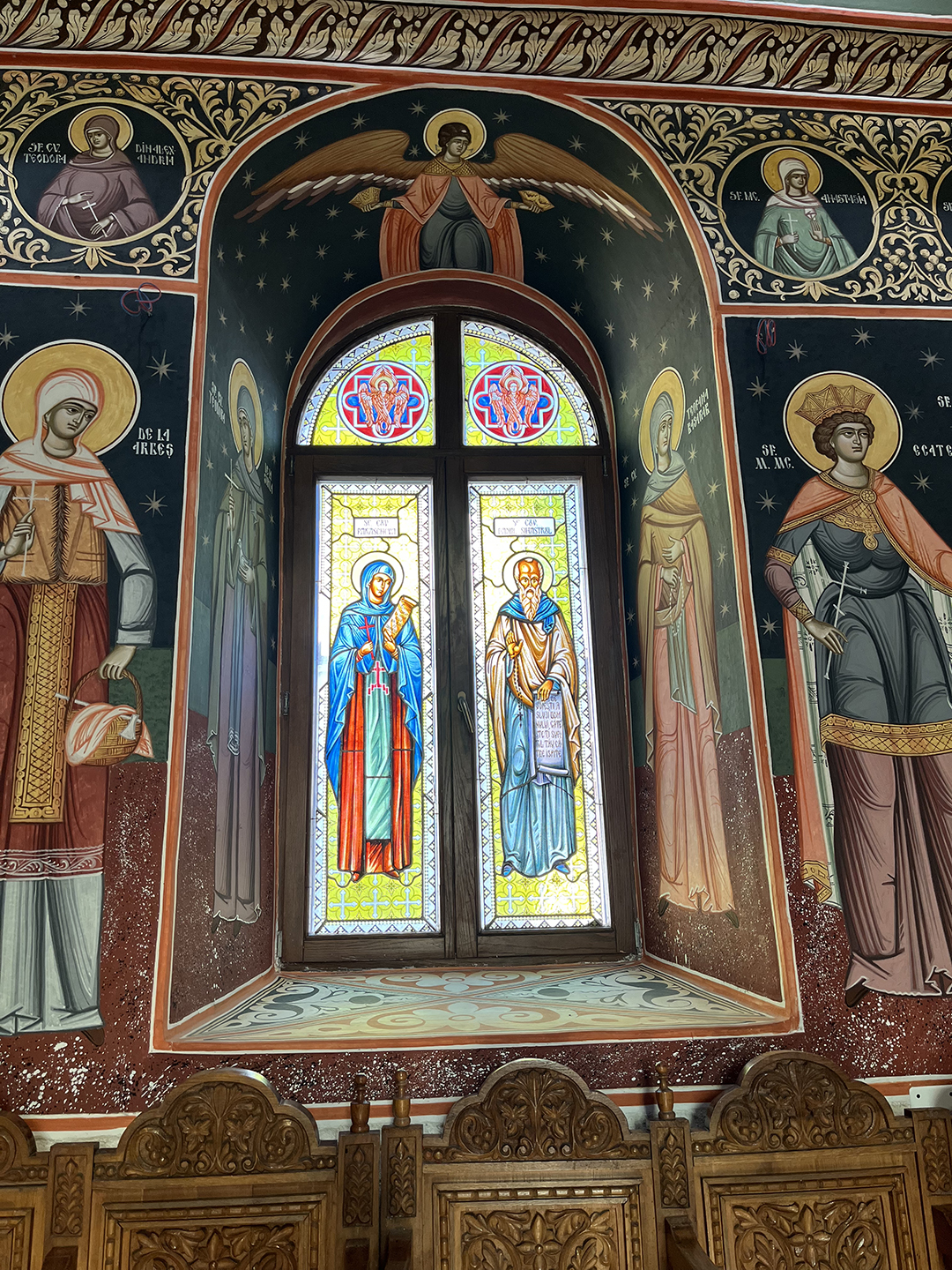

Portrait of Vlad the Impaler (!)
And finally, here we are at the embarkation point for our Danube cruise that will take us to Budapest!
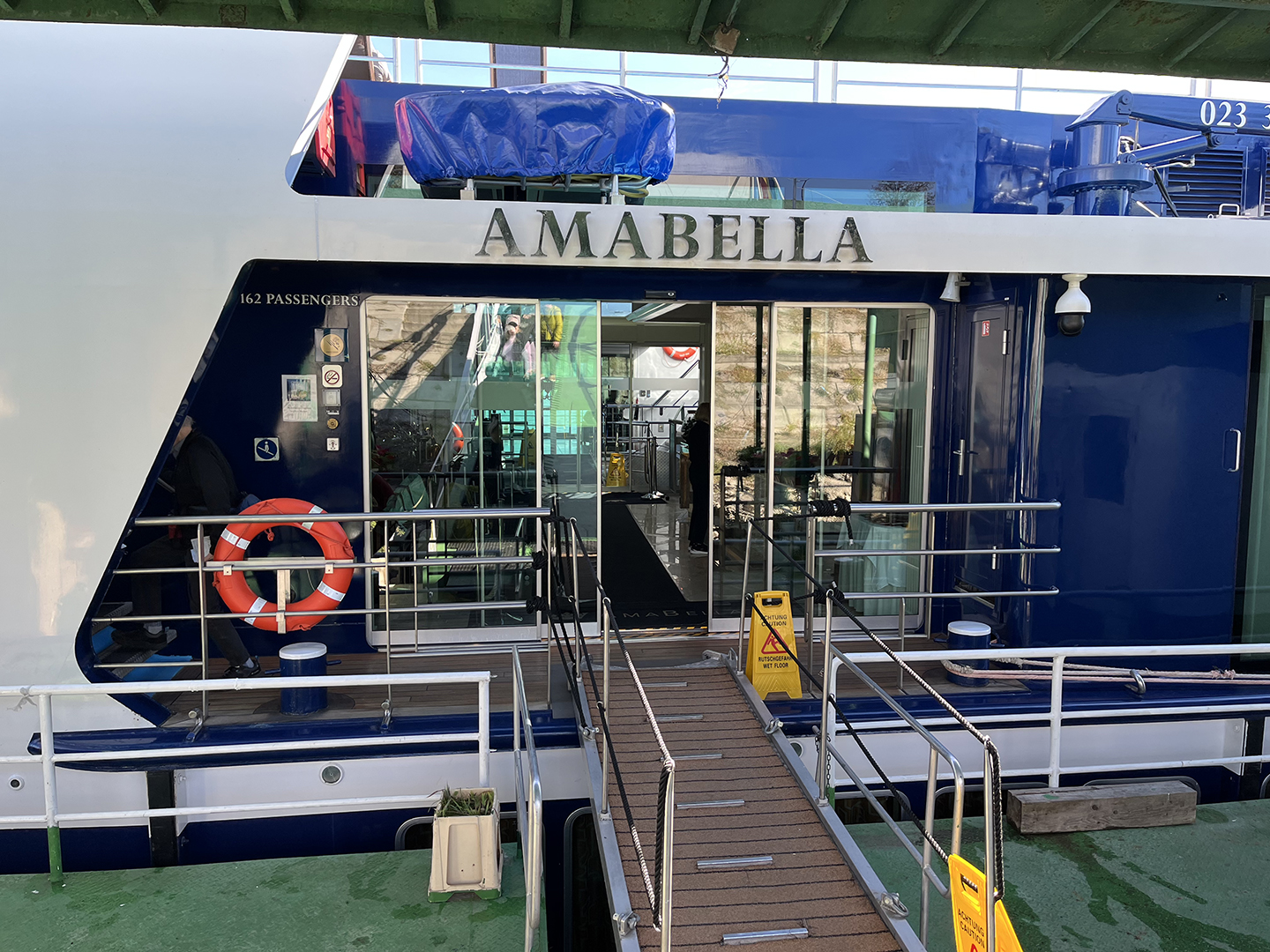
Welcome aboard!
To be continued…


