

Thursday, November 9: Arrived in Istanbul from Toronto at 3:50 pm after a nearly 11-hour flight on Turkish Airlines. I asked the steward – actually he must have been the chef on board because he was wearing whites and a big white hat that looked like a collapsed soufflé – if I could taste the Turkish wines served on the aircraft, since this would be my first taste of Turkish wines. The choice in Comfort Class was red or white, Turkish or French. Another steward came by with a glass each of Kavaklıdere 2011 (reminiscent of a Pinot Grigio – fresh, easy drinking, white peach and pear flavours – 86) and Kavaklıdere Ancyna Cabernet Sauvignon Syrah 2011 (deeply coloured, dry and savoury – 86). Then the obliging guy in the chef uniform with the soufflé hat brought me two glasses from Business Class, which were a step up in quality: Kavaklıdere Prestige Narince (rather like a Chardonnay – 87. Kavaklıdere is Turkey’s oldest and largest winery) and Karma Merlot-Boğazkere 2010 (rustic, blackcurrant flavour with soft tannins – 87).

On Turkish Airlines they give you slippers to wear. Slept well for six hours and awoke with my slippers still on. Didn’t figure out the time change properly and was convinced I had half an hour to get through immigration (where I had to buy a visa for $60) and security, rush to the Domestic terminal which was about a mile away. Arrived at the gate sweating like a pig to find no-one there and I thought the flight had left. Turns out I was 90 minutes early.
On the hour flight to Izmir they served the best snack I’ve had on an aircraft – a turkey, cheese and tomato roll with a plastic cup of smoked eggplant salad and a cup of chocolate banana mousse. Delicious. Glad I finished them because I was meant to be met at the airport and driven to join the conference group of wine bloggers for dinner somewhere before checking into my hotel. Had a scare when the carousel stopped and my luggage hadn’t appeared. Then someone from the airport took a group of us disgruntled passengers to another carousel where the baggage had arrived. I took a shuttle bus to the Swissôtel Grand Efes. In the mini bar in my room are half bottles of a white and red wine – Kavaklıdere Selection Narince-Emir 2010 and Kavaklıdere Selection Öküzgözü-Boğazkere 2007. Never knew a language could have so many accents – and z’s. Went up to the bar on the 9th floor and had a delicious Bloody Mary as I looked out over the harbour. Then to bed.

Izmir from my hotel window

Friday, November 10: At breakfast, my friend from London, Rosemary George MW, told me that 98% of Turkish wine is sold in the home market and that it’s very difficult for winemakers to import used barrels. Apparently, they can only lease old barrels and have to return them. Which means that start-up wineries are going to make very oaky wines. Turkish consumers seem to have latched on to international varieties that show oak.
At 9 am the Digital Wine Communications Conference began. The theme is “Source.” First session: Natural Wine. Dr. Jaimie Goode, author of Authentic Wine: Toward natural and sustainable winemaking. He says that there is no definition of natural wine. Some producers will not use sulphur products. Lot of producers fall into the category of natural winemaking but don’t call their products natural wines – like Romanée Conti. He contends that natural wine movement celebrates diversity and terroir; interesting wines with personality and often challenging flavours; that the movement has influenced the mainstream wines for the better. Negatives: briefing against mainstream wine by adherents; process focused. If winemakers go too far you’ve lost the sense of place; hard core “naturalistas” are zealots. The movement has brought a new focus on terroir. Problems around the term “natural wine” which can be misleading.
Virgile Joly, wine producer in the south of France, working 15 hectares in Saint Saturnin, Languedoc. To paraphrase him: Wine is the beverage resulting exclusively from the fermentation of fresh grapes. Industrial wines – only a few products can be used to assist fermentation, bottling, etc. “My natural wines are expensive to produce.” Difficult to protect (without sulphites). Difficult to explain to the consumer the concept of natural wines, confusing. “My bank manager doesn’t like them.”
Dr. Maurizio Ugliano of Nomacorc, specialist in flavour biochemistry in wine. Handling fermentation and the way they use yeast. The same family of microbes that create wine will participate in the production of vinegar – there’s a fine line between wine and vinegar. We isolate the “good bugs” in yeast and produce them in industrial quantities for wineries to introduce consistency. Yeasts change over time. “In the laboratory we isolate a yeast that has nice characteristics and cross with another.” Or fast-fermenting yeast crossed with a yeast that makes good aromas. Most common way to eliminate the bad microbes in yeast is to use sulphites. Today winemakers use less sulphites than they used to.
Robert Joseph, writer and producer of organic wines. “Free jazz is the equivalent of natural wine.” “We’re talking to each other about natural wines… The term natural wine is creepy. Natural wine doesn’t taste of the place where it was made… I can’t imagine why producers of natural wine put their cloudy wines into clear glass bottles… We have always protected wine – Romans used lead, sea water, we use sulphur. A better term would be ‘minimal intervention.’ Natural wine is a meaningless term.”
A lot of discussion followed and there was concerns expressed that there was no-one on the panel to speak for natural wines. I made the point from the floor that there is a lot of serendipity in natural winemaking as the producers don’t really know what they’re going to end up with. It you ferment whole clusters of white grapes by putting them into an amphora, for example, sealing it and then opening it in six months it’s rather like Vin Santo – don’t know the style of wine that will result.
Second session: Blind Tasting. Charles Metcalfe, co-creator of the International Wine Challenge: Only true way to assess wine is to taste blind. First impressions are usually right. Rating: numbers, stars are shorthand, a quick, easy reference. Three red wines were presented blind. I’ve recorded my guesses followed by the actual wine in brackets.
- Wine #1: smells of American oak, strawberries, could be a Rioja. (Viña Ardanza Reserva Especial 2001 from Rioja)
- Wine #2: Cabernet Sauvignon from Chile (Errazuriz Tribute Shiraz 2008 (?) from Chile)
- Wine #3: Chianti Classico (Château Brondelle 2008)
Spent 45 minutes tasting wines at various booths outside the main halls.
Next session: A tasting of International Varietal and Blended Wines, conducted by Christy Canterbury, MW. For seven centuries before 1935 Turkey did not produce wine until Kemal Atatürk decreed that the country should make wine. Turkey has the fifth largest vineyard surface in the world with a vast array of indigenous varieties – 1200–1500, mainly table grapes. Only 60 varieties in production as wine grapes today. A lot of sites in Turkey are at high elevations. Tasting mainly from the western regions of Turkey. International grape varieties: Shiraz is the most grown grape (after Sultana). “The term bargain Turkish wine is an oxymoron.” Yields here are quite low. Palate profile, Christy says, is similar to Italian wines because of their acid and tannin structures. We tasted:
- LA Mon Rêve 2010 (75% Chardonnay, 25% Chenin Blanc): straw colour; apple, quince nose; nicely balanced, fresh, dry, green apple and quince flavours with a spicy, oily note. (88) Largest single vineyard in Turkey. Farmed organically. Eight-year-old vines.
- Likya Sauvignon Blanc 2011: 13-year-old vineyard. Pale straw; crisply dry, minerally, tart, elegant, grassy with moderate length. (88)
- Sulva Chardonnay Reserve 2011: straw with a green tint; spicy, floral, tropical fruit; fresh, pineapple with lively acidity; medium weight, lovely mouth feel and good length. Barrique fermented. (90)
- LA Mon Rêve Tempranillo 2010 (50% carbonic maceration): deep ruby colour; fruity, plum, floral, savoury, meaty with a firm tannic finish. (87)
- Pamukkale Nodus Merlot-Cabernet Franc 2010 (38% Merlot, 50% Cabernet Franc): deep ruby; cedar, leafy, high toned; firmly structured, dry, red berry. (87)
- Selendi Sarniç Shiraz: dense purple colour; floral, blackberry nose with oak spice and mint; fruit forward, firm, (88)
- Selendi Red Blend 2010 (38% Merlot, 32% Cabernet Sauvignon, 23% Syrah, 8% Cabernet Franc): deep ruby colour; cedar, reb berry nose, Bordeaux style; medium-bodied, dry, claret-like. (88)
- Yazgan Mahra Cabernet Sauvignon & Syrah 2011: deep ruby; curranty, peppery nose. medium-bodied, firm structure. (87)
- Urla Tempus 2010 (40% Merlot, 41% Syrah, 15% Cabernet Sauvignon, 4% Petit Verdot + Cabernet Franc): unoaked; dense ruby colour; spicy, currant, well extracted fruit, high toned, tannic. (87)
- Mozai Mahrem Tannat 2010: dense ruby; vanilla oak, licorice, high toned and tannic, firmly structured and full on the palate. (88)
After lunch, a tasting entitled Grand Terroir conducted by Tim Atkin MW and Charles Metcalfe. Wines from Turkey, Georgia, Armenia and Lebanon. Only 3% of grapes grown in Turkey end up as wine. Fifth largest grape growing region in the world.

Charles Metcalfe, left, and Tim Atkin MW chairing Grand Terroir tasting

- Kavaklıdere Côtes d’Avanos Narince Chardonnay 2011 (Turkey): light straw colour; spicy, apple nose; lively, apple and pear flavours with a suggestion of oak and a touch of bitterness on the finish. Good middle fruit (88). Narince means “delicate.”
- Telani Valley Samshvensisi Kveris 2010 (Georgia – Rkatsiteli made in amphorae):pale amber colour; oxidative note on the nose; dried apricot with a bitter, tannic note. Like a vin jaune. (86)
- Zorah Karasi 2010 (Areni Noir grape – Armenia): ruby colour; spicy cherry and tobacco leaf nose; dry, fruity but firm with ripe bitter chocolate tannins (aged in amphorae after fermentation). (89)
- Vinotera Saperavi 2009 (Georgia) (fermented in qvevri then into oak): inky, meaty nose; dry with lively acidity with a lovely floral grace note with a tannic finish. Needs time (89)
- Château Ka Fleur de Ka 2006 (Lebanon – Cabernet, Merlot, Syrah): deep ruby; cigar box, blackcurrant nose with cedar notes; medium-bodied, firmly structured, claret-like. (89)
- Sevilen Plato Kalecik Karasi 2011 (Turkey): ruby colour with a violet tint; light, fruity, cherry nose; creamy mouth feel, dry and firm with a little vanilla. Medium-bodied, light on the palate, Gamay-like. (89)
- Domaine des Tourelles Marquis des Beys 2006 (Lebanon): dense purple-ruby colour; tobacco-leaf, blackcurrant, cedar nose; well extracted fruit, firmly structured, medium-bodied, elegant, well structured. Claret style. (90) Bush vines.
Following this structured tasting there was a walk-around table-top tasting of wines from the regions we tasted at the structured Grand Terroir tasting, plus other Turkish producers. Two harpists played as we scrummed around the tables. It was just too crowded so I only tasted three wines.
- Chamlija Narince 2011 (Turkey): dry, pear and apple flavours; nicely balanced. A well-made wine, reminiscent of a cool climate Chardonnay. (89)
- Château Ka Source Blanche 2011 (Bekaa Valley, Lebanon): A blend of Sauvignon Blanc, Viognier, Muscat, Chardonnay. Aromatic nose with a grassy note; elegant with great balance between the varieties. (89)
- Château Musar 2004 (Bekaa Valley, Lebanon): high toned, savoury, balsamic notes with a flavour of dried red berries. (88)

Harpists play during Turkish wine tasting

The gala dinner tonight is held in the ballroom of the convention centre, which is attached to the hotel. Reception wines: Pamukkale Trio White 2011 (Chardonnay, Narince, Sauvignon Blanc) and Selendi Gülpembe Rosé 2011 (Grenache, Mourvèdre, Cinsault). Sat at the same table as Elin McCoy, the wine columnist for Bloomberg News, Joel Butler MW, Lisa Shara Hall, Blake Gray, Pat McGovern and José Vuillamoz (who has just published a massive tome on wine grapes with Jancis Robinson and Juila Harding). I had met both Pat and José on the trip to Georgia last year.
First course: Seafood trio, pan-fried scallops, marinated sea bass and Cesme shrimp tartar, served with Sevilen 900 Fumé Blanc 2010 and Vinkara Doruk Kalecik Karası 2011
Second course: Crispy duck with coriander salad and plum sauce, with Sulva Sur 2010 (Merlot, Cabernet Sauvignon, Cabernet Franc, Petit Verdot – the wine of the night for me) and Kavaklıdere Prestige Öküzgözü 2009
Third course: Fillet of Porgy fish with salicornia and basil sauce, with Yazgan Emir 2011 and La Mon Rêve Chardonnay & Chenin Blanc 2010 (best white of the night)
Fourth course: Grilled bon filet in herb crust, fennel puree, Aegean potatoes, red wine sauce, with Kayra Vintage Öküzgözü 2010 and Pamukkale Anfora Cabernet Sauvignon 2009
Dessert: Chestnuts dream with caramel vanilla sauce, with Doluca Safir 2010 and LA Passito 2010 (Misket)
Our conversation was drowned out by the singer and the band.
Sunday, November 11: Checked out of the hotel and bussed to the airport. Fifteen of us from the conference are going to Elaziğ. An hour’s flight to Ankara, where we had lunch at the airport (I had a plate of bean and meat soup accompanied by a plate of rice and gherkins), and then another flight to Elaziğ, where we were met by a bus. It began to rain here and virtually did not stop all evening (our guide says, “We have an expression in Turkish: we are not sugar; we don’t melt (in the rain).”)
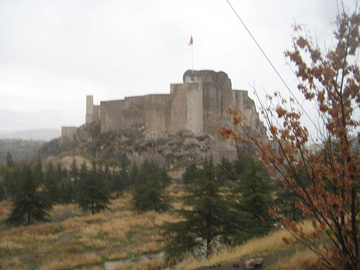
Harput castle
We drove to the ancient town of Harput near the source of the Euphrates. The first written mention of Harput dates from 2000 BC. Our first stop is Harput Castle, known as the Milk Castle, as there was a water shortage during the building of the foundations and cow’s milk was used to make the mortar for the walls. Next stop, the Church of the Virgin Mary, which dates back to 179 AD, reputed to be the oldest church in the world. It is built into the side of a cliff.
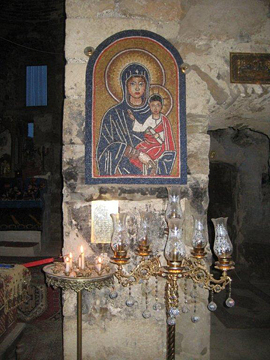
Shrine in the Church of the Virgin Mary, Harput

Then on to the Grand Mosque of Harput with its leaning minaret tower, constructed between 1156 and 1157. Unusual in that it was built in a rectangular form. Finally, still in the pouring rain, we visited the spice market, where I bought some red pepper, chickpeas and honey.

The Grand Mosque of Harput

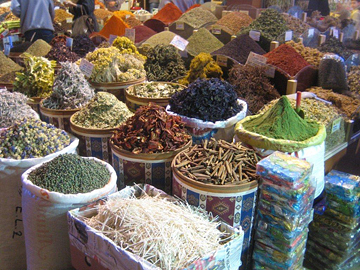
A spice market in Harput
At the hotel, the representatives from Kayra Winery had arranged a Traditional Welcome Dinner. We began with a sparkling rosé, Kayra Cameo. Then a local meze plate of grilled eggplant salad, acılı ezme, tarama, kaşık salad, çiğ köfte, served with Terra Kalecik Karası Rosé 2011 and Terra Beyaz Kalecik Karası 2011. We were entertained with traditional music and the equally traditional Gayda Gira, a dance with candles.

The Candle Dance
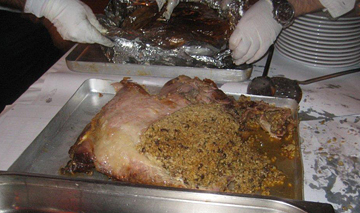
Shoulder of lamb

Then the meat dishes started arriving. Roasted lamb, served with Kayra Vintage Öküzgözü 2010 and stuffed lamb rib, with Kayra Vintage Boğazkere 2009 (the wine of the night). Then plates of local cheese – Kars gravyerim Trakya Kaşari, Bergama tulumu, Erzincan tulumu, Orgücheese, Ezine. Finally, a huge wedge of baklava, with Kayra Madre 2007 (made from Öküzgözü and Boğazkere).

The wine of the night


Breakfast in Elazig
Monday, November 12: Woken up at 4:45 am by the sound of a muezzin calling the faithful to prayer. After a traditional breakfast we were driven to Kayra winery for a tasting led by consulting winemaker Daniel O’Donnell (from California), featuring the two local red varieties, Öküzgözü and Boğazkere . He passed around frozen Öküzgözü grapes picked Sunday. Then freshly picked Öküzgözü – very juicy. Followed by the hugely tannic Boğazkere grapes. We tasted tank samples of Öküzgözü 2012 Kayra Vineyard Elaziğ: dense purple-black colour staining the glass; Öküzgözü 2012 Denizli 2012, mid quality, low quality, Terra Öküzgözü 2011, Terra Öküzgözü 2010 (cellar).

Kayra’s consulting winemaker, Daniel O’Donnell
Session #2: Öküzgözü tank samples from the 20 hectare Sukru Baran Vineyard in different soils and different slopes. Vintage Öküzgözü 2010 and 2009.
Session #3: Buzbağ Reserv (Öküzgözü & Boğazkere) 2005, 2006, 2007, 2008.
Session #4: Tank samples of Terra Boğazkere 2012 Denizli, 2012 Kayra Vineyard, 2012 Diyarbakır; Boğazkere 2012 Diyarbakır. Cellar: Terra Boğazkere 2010, Vintage Boğazkere 2009. Boğazkere is a highly tannic grape. “The John Wayne of grapes,” says Daniel.
Session #5: “From our Vineyard”: Imperial 2006 Öküzgözü Blend, Versus Chardonnay & Viognier 2011 (tank samples), Versus Syrah & Viognier 2010, Versus Cabernet Franc 2010, 2008. Buzbağ 2011. A fascinating technical tasting.
Daniel presented me with a bottle of the first bottling of a wine that only Kayra makes: a clone of Öküzgözü called “Köse Tevek” (hairless vine). It came from a special block in the vineyard of the late Sukru Baran in Elaziğ’s Aydıncık region. We visited the vineyard after a traditional lunch in Kayra’s cellar, which started witha sparkling wine, Kayra Cameo Rosé and Terra Beyaz Kalecik Karası 2011. First course: Traditional winter wheat soup and grilled eggplant, followed by dilim dolma (bulgur and meat rolled with aubergine in sour sumac sauce) and pastry with roasted meat, served with Terra Kalecik Karası Rosé 2011 and Terra Öküzgözü 2011. Next course, tavuk üfeleme (chicken and crumbled filo bread topped with pomegranate), “içli köfte” (meat stuffed with bulgur), with Terra Kalecik Karası 2011. Dessert: Creamy ice cream with Elaziğ sour cherries, with Kayra Madre 2007.

The Sukru Baran vineyard
After lunch we visited the Sukru Baran vineyard on our way to the airport for the trip back to Istanbul via Ankara. I said goodbye to our group as I am staying at a different hotel – the Marmara Pera Hotel in Taksim.
Tuesday, November 13: I have a whole day in Istanbul to tour the city. I walked down from the hotel to the Spice Market, marvelling at the number of fishermen lined up along the Galata Bridge, hundreds of them.

Fishing off the Galata Bridge, Istanbul

Galata Bridge, Istanbul

Stopped in at a baklava shop and got into conversation with a woman from Zimbabwe who is married to a Turk. She told me I must visit the Rustem Pasha mosque to see the most beautiful decorative tiles in the city. The mosque was a few paces away and indeed the tiles are spectacular.

Rustem Pasha Mosque, Istanbul

Exterior tiles of the Rustem Pasha Mosque, Istanbul

The Grand Bazaar in Istanbul

Turkish Delight store

Spice store, Istanbul

Sweetmeats and spices, Istanbul

Dogs wait patiently outside a butcher’s shop

Line-up for freshly ground Turkish coffee
Walked through the bazaar and had the obligatory Turkish coffee, which was underwhelming (watery). Then I took a two-hour cruise on the Bosphorus. A perfect day to see the old palaces and forts from the water on both the European and Asian sides. Got lost trying to find my way back to the hotel and walked for miles.

The New Mosque, Istanbul

Mosques of Istanbul
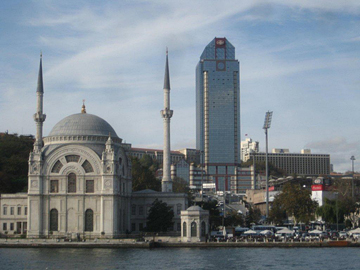
Buildings on the Bosphorus

Bosphorus village

The Fort of Europe
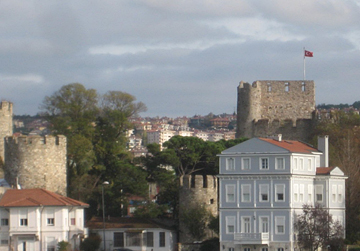
The Fort of Asia on the Bosphorus’s Asiatic side

Decided I need to eat fish after all the meat I’ve been consuming, so the hotel booked a reservation for me at Yaka Balık Restaurant under the Galata Bridge. Their brochure reads, “While you are watching the fine view of the Bosphorus at the Galata Seaboard… You will sup your drinks with insatiate tastes.” The owner came to collect me in his car. The restaurant is one of many fish places under the Galata Bridge on both the Golden Horn side and the Bosphorus side. I ordered aubergine salad and grilled calamari to start (the calamari came with a dipping sauce of soy). For my main course, a plate of mixed fish, and a half bottle of Doluca Antik 2011 (a crisp white blend of Emir and Narince).
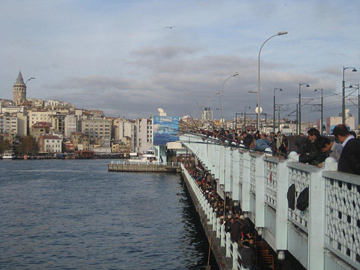
Fishing the Bosphorus

My mixed fish dinner in Istanbul
When I got back to the hotel I got a message from Blake Gray that he was staying in the hotel and that he, Tim Atkin, Charles Metcalfe, Christy Canterbury were having dinner in the hotel restaurant on the 17th floor. I joined them for a glass of Vinkara Narince 2011 before returning to my room to pack for tomorrow’s departure.
Wednesday, November 14: After breakfast a car came to take me and Blake to the airport. Once through security we made our way to the lounge. The Turkish Airlines’ international lounge at Atatürk Airport is breathtaking. It’s vast and very light and modern. They have a full restaurant here with chefs, two coffee bars with baristas, an amazing sweet table, salad bar, an olive bar (with 14 varieties), nine TV screens and individual headphones. Turkish wines are available and there’s a pool table! I think I’ll move in. A mercifully uneventful flight home with delicious food and Turkish wine. Altogether a very entertaining and educational week.
Thursday, November 15: Pinot the Wonderdog licked the tops of the baklava I brought back for Deborah from the airport lounge in Istanbul. She’s in the dog house. Caught up on emails. Then did a tasting of wines that had arrived during my absence.
- 2010 Closson Chase Vineyard Pinot Noir (Prince Edward County): light ruby colour; high toned, raspberry nose with just a suggestion of oak; elegant, dry, supple on the palate with a lovely velvety mouth feel; very Volnay in style with good length and just a hint of volatility that gives the flavour a lift. (90)
- Trius Merlot 2011 (Niagara Peninsula): ruby colour; earthy, red berry and plum nose; dry, blueberry flavour, medium-bodied, firm and dry; good texture. (87)
- Trius Cabernet Sauvignon 2011 (Niagara Peninsula): ruby colour; cedar, currants with a floral note on the nose; perfumed, redcurrant flavour, very elegant for the price with enough oak and tannin to give structure. (88)
- La Ferme du Mont Première Côte Côtes du Rhône 2009: deep ruby colour; oaky, savoury nose of black fruits and toasted herbs; well extracted, sweet black fruit flavours with Kirsch and dark chocolate notes; powerful and mouth-filling. (88)
- Cono Sur Bicicleta Cabernet Sauvignon 2011 (Chile): deep purple colour; cedar, blackcurrant and coffee bean on the nose; medium-bodied, blackcurrant flavour with good acidity. (87)
- Cono Sur Bicicleta Merlot 2011 (Chile): deep ruby colour; floral, spicy, blackberry nose; medium-bodied, firmly structured, dry blackcurrant flavour, nicely balanced with soft tannins. (87)
- Cono Sur Bicicleta Pinot Noir 2011 (Central Valley, Chile): ruby colour; cherry and raspberry nose with a light floral note; dry, flinty, sour cherry flavour with lively acidity and a firm finish. (88)
- Cono Sur Bicicleta Viognier 2011 (Colchagua Valley, Chile): medium straw colour; spicy vanilla oak, peach and honeysuckle nose; rich mouth feel, well extracted peach flavour with a spicy note. (88)
- Drouhin Vaudon Chablis 2010 (Burgundy): pale straw colour; minerally, apple nose; crisply dry, with a green apple, green pineapple and lemon flavour backed by a mineral note. Versatile food wine. (89)
- Trius Chardonnay 2011 (Niagara Peninsula): pale straw colour; spicy, melon and apple nose; a thickness on the palate with a cashew nut flavour, medium-bodied and full on the palate with a tangerine note on the finish. Well made. (87)
- Closson Chase The Brock Chardonnay 2010 (Prince Edward County using Niagara fruit; unfiltered): golden straw colour; nutty, toasty, caramel and apple nose; full-bodied, fleshy and unctuous on the palate, rich peach and tropical fruit flavours rounded with toasty oak and a long languorous but muscular finish. A wine for heroes, not for the faint of heart. (91)
Friday, November 16: Spent the morning working on the Canadian wineries book, writing the profiles of BC’s Road 13 and Venturi Schulze. Went to a shiva for my friend David Rose’s mother, who passed away at the age of 91. His remarkable father, age 93, was there surrounded by his family. Came home and did a tasting.
- Mouton Cadet Blanc 2011 (Bordeaux; 60% Semillon – 30% Sauvignon Blanc – 10% Muscadelle): pale straw with a lime tint; this is the best Mouton Cadet Blanc I have tasted, grassy, green fig. Very elegant and good value. (88)
- Moselland Bernkasteler Kurfürstlay Riesling 2011 (Mosel): pale straw colour; minerally, citrus, white peach nose; broad on the palate with lime and honey flavours; off-dry, grapey, easy drinking. Good value. (86)
- Strewn Two Vines Riesling Gewurztraminer 2011 (Niagara Peninsula): light straw colour; spicy, grapefruit zest nose; medium-bodied, off-dry, lychee and grapefruit flavours, nicely balanced with a pepperminty finish. Good value. (87)
- Strewn Gewurztraminer 2011 (Niagara Peninsula): light straw colour; the Gewurz character is there on the nose but barely; better on the palate with lychee and rose petal flavours; dry, fresh with decent length. Perhaps another year in bottle will develop the bouquet. (87)
- Banrock Station Unwooded Chardonnay 2011 (Southeastern Australia): light straw colour; pear skin nose; dry, medium-bodied, mouth-filling pear flavour with a touch of sweetness in mid-palate. (86)
- Stratus Wildass 2008 (Niagara Peninsula): light straw colour with a lime tint; mature, lifted nose of oak, white flowers, spices, peaches; rich and full on the palate, intense and concentrated with a peachy, toasty, nutty finish. Warm alcoholic finish. (89)
- Da Vinci Chianti 2010: solid ruby colour; a nose of cherries and dried tobacco leaves; medium-bodied, dry, sour cherry and mint flavours with racy acidity; nicely handled oak. (88)
- Huff Estates South Bay Vineyards Merlot 2008 (Prince Edward County): light ruby colour; leafy, red berry nose; light on the palate, acid and oak come through before the fruit; cranberry and pomegranate flavours with a tart finish. (86)
- Henry of Pelham Estate Cabernet-Merlot 2010 (Short Hills Bench, Ontario): ruby colour; cedar, green pepper, currants on the nose; medium-bodied, dry, bitter chocolate flavour with a floral note. Good value. (87+)
- Stratus Wildass Red 2011 (Niagara Peninsula – Cabernet Franc, Merlot, Cabernet Sauvignon , Syrah, Tannat): ruby colour; spicy, tobacco leaf, chocolate nose; medium-bodied, lively on the palate with flavours of plum and red berries, soft tannins heightened by vanilla oak notes. The best Wildass Red to date. (88+)
- Stratus Red 2009 (Niagara-on-the-Lake – 43% Cabernet Franc, 22% Cabernet Sauvignon, 17% Syrah, 13% Petit Verdot, 4% Tannat, 1% Merlot): solid ruby colour; a complex nose of oak spice, cedar, chocolate and red cherries; beautifully balanced flavours melded with oak and grainy tannins. Good length (90).
Deborah and I went across the road to The Homecoming for dinner. I ordered braised beef and opened a bottle of Gianni Gagliardo Barolo 2006 (mature ruby colour; a nose of rose petals, cherry, smoke and tar; medium-bodied, dry, very elegant cherry flavour; firm and tannic. Still youthful. Like to try it again in five years (92)).